 Author:



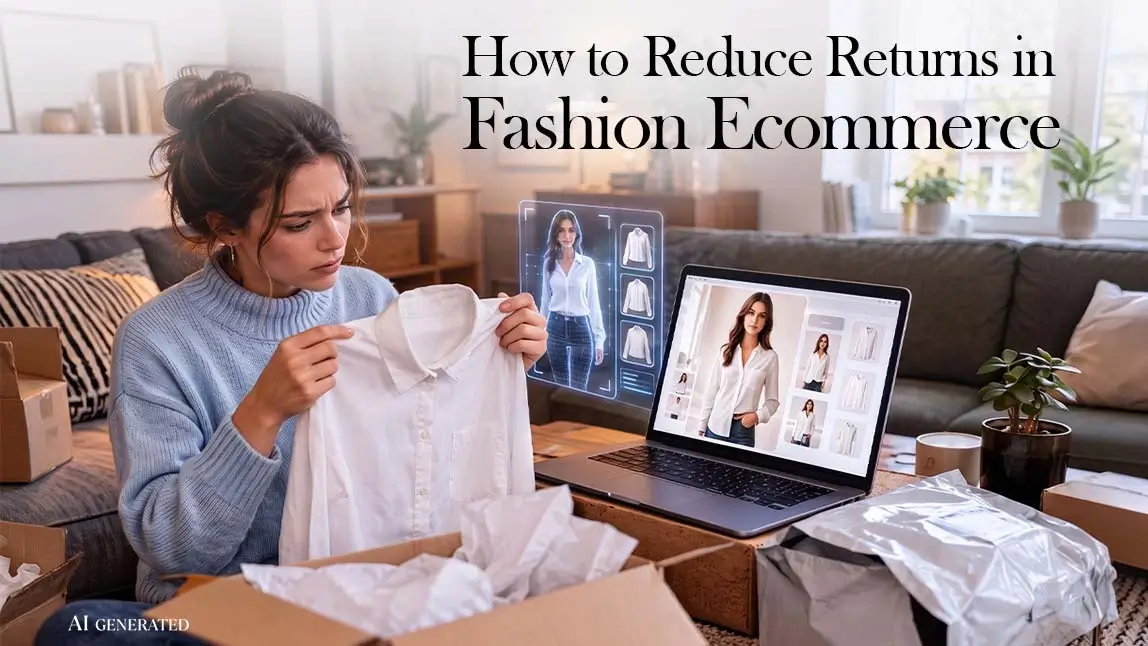
To reduce returns in fashion ecommerce, start with why each item came back, not with a blanket policy change. Size and fit returns need better size data. "Not as expected" returns need product imagery that shows how a garment really looks on a person. Bracketing needs a mix of size guidance and shopper confidence. Damage and quality returns need fixes in the warehouse and on the product page. One tactic rarely fixes all four.
This guide takes each return reason in turn: what it signals, what tends to fix it, and how to measure whether the fix worked. It also covers where virtual try-on fits. Tools such as the AI Clothes Changer API show shoppers how a garment looks on them, which targets appearance-related returns. They are not a sizing tool, and this article treats them accordingly.
Table of Contents
- Fashion Return Reasons and What Fixes Each One
- Why Fashion Ecommerce Returns Run So High
- How to Reduce Size and Fit Returns
- How to Reduce "Not as Expected" Returns
- Bracketing and Serial Returners
- Quality, Damage and Description Returns
- How to Measure What Actually Reduces Returns
- What the AI Clothes Changer API Handles
- FAQ
- Conclusion
Fashion Return Reasons and What Fixes Each One

Use this table as a diagnostic map. Find the reason that drives the most returns in your own data, then start with the fix in that row.
| Return reason | What it usually signals | What tends to fix it | Role of virtual try-on |
|---|---|---|---|
| Too small / too big | Unclear size charts, inconsistent grading, no fit notes | Garment measurements, fit notes, size recommendations, consistent grading | None. Try-on is visual and doesn't recommend sizes |
| Looks different than expected | Flat or limited imagery, no on-body view, styling hard to picture | On-model photos, more angles, detail shots, virtual try-on | Core use case: shows the garment on the shopper's own photo |
| Color not as expected | Inaccurate product photos, or a shade that doesn't suit the shopper | Color-accurate photography, color notes, try-on in each colorway | Helps with "doesn't suit me," not with inaccurate source photos |
| Bracketing (bought several, kept one) | Size doubt, or indecision between styles and colors | Size guidance for size brackets; visual comparison for style brackets | Partial: can replace "order both colors to compare" |
| Damaged or defective | Packing, transit or quality-control gaps | QC checks, better packaging, supplier feedback | None |
| Fabric or quality not as described | Vague copy about fabric weight, sheerness or stretch | Specific descriptions, close-up fabric shots, review highlights | None |
Why Fashion Ecommerce Returns Run So High
Online purchases come back more often than store purchases, and apparel is the hardest category. The National Retail Federation and Happy Returns estimate that 19.3% of online sales would be returned in 2025, compared with 15.8% of all retail sales. For clothing specifically, Coresight Research estimated a 24.4% online apparel return rate in its survey of US apparel brands and retailers.
The reason is simple: in a store, the shopper tries the garment on before paying. Online, they decide from photos, a size chart and a description, then do the fitting room step at home. In Coresight's survey, size and fit was the top return reason (cited by 53% of respondents), followed by color (16%) and damage (10%). That split matters, because each reason needs a different fix.
Ecommerce returns are also shaped by policy and shopper behavior. The same NRF report found that 82% of consumers call free returns a major purchase consideration, and that close to two-thirds admit to at least one costly return behavior, such as bracketing or wardrobing. A returns strategy that only tightens policy risks hurting conversion. One that only improves product pages won't touch deliberate behavior. You usually need both.

How to Reduce Size and Fit Returns
Size and fit is usually the biggest bucket, and it is a data problem. Shoppers return items when the size chart doesn't help them choose. These fixes target that gap directly:
- Publish garment measurements, not just body measurements. A chest width or inseam for the actual garment answers "will this fit like the one I own?" better than a generic S/M/L chart.
- Add fit notes per product. "Runs small," "relaxed through the hip" or "cropped length" removes guesswork. Pull these from your own return comments and reviews.
- State the model's height and size on every on-model photo, so shoppers can compare against their own frame.
- Keep grading consistent across your line. If a medium in one collection fits like a large in another, shoppers learn to bracket. The fix starts at sampling: fit samples tried on several body types give you the measurements for your size chart and fit notes, as our guide on how to start a clothing brand explains.
- Use size recommendation tools if your catalog is large enough to justify them. They work from body data and purchase history, which is a different job from visual try-on.
- Feed fit returns back to product development. A style with a high "too small" rate often needs a pattern change, not better copy.
Be clear internally about what does not belong here: virtual try-on. A try-on image shows how a garment looks on a person in their photo. It doesn't measure the shopper or tell them which size to order, so it should never be presented as a size or fit tool.
How to Reduce "Not as Expected" Returns: Imagery, On-Model Photos and Virtual Try-On
"Not as expected" covers returns where the item fits but disappoints: the silhouette looks different on the body, the color doesn't suit the shopper, or the style just isn't what they pictured. These returns come from a gap between the product page and the real garment on a real person. Closing that gap is mostly an imagery job.
Show every product on a person
Flat-lay and packshot images are useful for detail, but they don't show drape, length or proportions. On-model photos do. If shooting every SKU on a model isn't realistic, generating on-model images from your existing product photos is one route. Our guide to AI on-model product photography covers how brands do this with their own model photos.
Show variety, not one idealized shot
One model photo helps, but it only answers "how does this look on that person?" Showing the same garment on different body types and from several angles, plus close-ups of neckline, hem and fabric, helps more shoppers picture it on themselves.
Let shoppers see the garment on themselves with virtual try-on
Virtual try-on takes the last step: the shopper uploads a photo and sees the garment on their own body shape, proportions and coloring. This is the most direct answer to "it didn't look right on me." With a photo-based clothes try-on API, the garment is generated onto the shopper's photo in that photo's pose and lighting. It is not a live camera or 3D experience, and it works from your standard product images, so no 3D garment models are needed.
Actual results from Perfect Corp.'s AI clothes virtual try-on tool.
Treat color in two parts
Color returns have two causes, and only one is visual preference. If the product photo misrepresents the real color, fix the photography first: shoot in neutral light, calibrate, and add a short color note ("a warm, slightly muted green"). Virtual try-on uses your product image as its source, so it inherits any color error in that image. Once your photos are accurate, try-on helps with the other cause: "this shade doesn't suit me." Shoppers can compare colorways on their own photo before ordering.
Upload a garment image and a model photo
See try-on results in the API Playground before writing any code.
Bracketing and Serial Returners: Manage the Behavior, Not Just the Policy
Bracketing means ordering several versions of an item, such as two sizes or three colors, and returning all but one. Serial returners are shoppers whose return rate stays far above average over time. Both are expensive, but treating every high-return shopper as a problem customer can push away loyal buyers who simply shop a lot.
Split bracketing by type
- Size bracketing (same item, two sizes) is a fit-confidence problem. The fixes are in the size and fit section above.
- Style or color bracketing (two colors or two styles, to compare at home) is a visualization problem. On-model imagery and virtual try-on can replace part of the "order both and decide" habit.
Your order data shows which is which: same SKU in different sizes versus different SKUs or colorways in one order.
Handle serial returners with segments, not bans
- Segment first. Compare return rate with order value and lifetime value. A high-return, high-spend customer is different from one who returns nearly everything.
- Look at the reasons. If a frequent returner's reasons are mostly "too small," your size data may be the real issue.
- Use targeted levers. Exchange-first flows, store credit, or a return fee for specific segments are less blunt than account bans.
- Separate behavior from fraud. Wardrobing (wearing once, then returning) and empty-box returns need fraud controls, not product-page fixes.
Reduce Quality, Damage and Description Returns
Some returns have nothing to do with fit or appearance. They happen when the garment arrives damaged or feels different from what the page promised.

- Describe fabric precisely. Composition, weight, stretch, sheerness and lining answer the questions that otherwise turn into "not as described" returns.
- Add close-up fabric shots that show texture and transparency in natural light.
- Surface review themes such as "thinner than expected" near the description, and fix the copy or the product.
- Check packing and QC. Track damage returns by warehouse, carrier and supplier so the pattern points to the cause.
- Tell suppliers. Recurring defects on one style are a sourcing issue, so share return data by style and agree on how defects will be handled.
How to Measure What Actually Reduces Returns
Ecommerce returns management only improves what it measures. Without clean data, you can't tell whether a new size chart, better photos or virtual try-on made any difference.
Fix your return reason codes
- Make reasons specific. Split "didn't like it" into "looks different on me," "color different from photo" and "style not as expected." Split fit into "too small" and "too big."
- Make the reason required in the return flow, and keep the list short enough that shoppers answer honestly.
- Add an optional comment field. A few words from the shopper often explain a spike faster than the code alone.
Track the right metrics
Track return rate by reason, by category and by SKU, not just one store-wide number. The basic return rate formula is units returned divided by units sold. Also track exchange rate (an exchange keeps the sale) and net revenue after returns, so a lower return rate isn't bought with lower conversion.
Test changes at category level
Run one change at a time on a category with a clear return problem. For example, add virtual try-on to dresses with a high "looks different on me" rate, and keep a comparable control. Compare the targeted return reason, not just total returns, and wait until the return window closes for each order cohort before reading results. The answer is specific to your catalog, which is why claims of a universal "X% fewer returns" deserve skepticism.
What the AI Clothes Changer API Handles (and What It Doesn't)
For teams tackling appearance-related returns, the AI Clothes Changer API from Perfect Corp. adds photo-based virtual try-on to product pages and apps. Here is what it does, based on the product documentation:
- Inputs: a person photo (full-body, half-body or selfie-style, uploaded by the shopper or a model photo from the brand) and a garment image. Front-facing product-only images and garment photos featuring a model both work, in standard JPG or PNG up to 10MB.
- Categories: dresses, tops, bottoms, outerwear, swimwear, lingerie, shoes and more, as full or partial outfits. Jackets, coats and vests can be previewed as an outer layer over the clothing already in the photo.
- Output: a photorealistic try-on image, generated to follow the person's body shape, proportions and lighting.
- Integration: a RESTful API with JSON responses, usable on websites, iOS and Android apps, in-store kiosks and backend systems. No 3D garment models are required.
What it doesn't do matters just as much for a returns program. It doesn't recommend sizes or predict fit, and it isn't a live-camera or video experience. Use it alongside your size tools, not instead of them.

Who uses clothes try-on to cut returns
- Fashion brands and retailers adding a "see it on you" step to categories with high "looks different" returns, such as dresses and occasionwear.
- Resale marketplaces, where every item is one of a kind and a return is especially costly. See our guide to virtual try-on for resale and secondhand marketplaces.
- Rental platforms, where a garment that disappoints on arrival costs a rental cycle. Our clothing rental business guide covers where try-on fits in that model.
Perfect Corp. brings more than 10 years of AI and AR development and has worked with 800+ global brands. The platform is ISO/IEC 27001:2022 certified, and GDPR is applied company-wide. For enterprise deployments, see the AI Clothes Changer business solution.
How to get started
- Get a free API key in the API Console.
- Test with your own garments and model photos in the API Playground.
- Read the AI Clothes API documentation for endpoints and parameters. If you build with a coding agent, the MCP documentation covers that route, and our Cursor tutorial walks through a full build.
- Check pay-per-use pricing, then launch on one high-return category and measure it as described above.
FAQ
How do you reduce your return rate?
Find out why items come back, then fix the biggest reason first. Better size data reduces fit returns, on-model imagery and virtual try-on reduce "not as expected" returns, and QC and packaging reduce damage returns. Test one change per category and compare the targeted return reason against a control.
What is the 80/20 rule in ecommerce returns?
The 80/20 rule (the Pareto principle) suggests that a small share of causes drives most of the results. Applied to returns, it means a small group of SKUs, categories or return reasons often accounts for most of your returns. The exact split varies by store, so rank your SKUs by return count and reason, and fix the top of the list first.
How should you handle ecommerce returns?
Good ecommerce returns management combines a clear policy, an easy return portal and required reason codes. Offer exchanges or store credit first, inspect and restock quickly, and run fraud checks on suspicious patterns. Then feed the return data back to merchandising and product teams so the same returns don't repeat.
What percentage of online clothes are returned?
Coresight Research estimated the US online apparel return rate at 24.4% in its 2023 survey of apparel brands and retailers. For all online purchases, the NRF and Happy Returns estimated 19.3% in 2025. Your own rate depends heavily on category, price point and return policy.
What is the main reason people return clothes bought online?
Size and fit. In Coresight's survey, it was the most-cited return reason (53% of respondents), ahead of color (16%) and damage (10%).
Does virtual try-on reduce returns?
It targets one group of returns: items that fit but don't look the way the shopper expected. It doesn't address size, damage or quality returns. The reliable way to know its effect on your store is a category-level test that compares the targeted return reason against a control.
What is bracketing in online shopping?
Bracketing is ordering several versions of an item, such as two sizes or two colors, intending to keep one and return the rest. Size bracketing points to fit uncertainty; color or style bracketing points to shoppers needing a better way to compare before buying.
What is a serial returner?
A serial returner is a shopper whose return rate stays well above average across many orders. Some are bracketing or wardrobing; others are high-spend customers reacting to fit problems. Segment them by return reason and lifetime value before deciding on any policy.
How do you calculate your return rate?
Divide units returned by units sold over the same period, then multiply by 100. Calculate it per category and per return reason as well as store-wide, so you can see where returns actually come from.
Should you charge for returns to reduce them?
Return fees can reduce some returns, but free returns strongly influence buying decisions: 82% of consumers in the NRF and Happy Returns survey called them a major consideration. Many retailers apply fees selectively, for example to specific segments, while keeping exchanges free.
Conclusion
Reducing returns in fashion ecommerce starts with the reason code. Size and fit returns need better size data and consistent grading. "Not as expected" returns need imagery that shows garments on people, including virtual try-on on the shopper's own photo. Bracketing and serial returners need segmentation more than blanket rules, and damage and quality returns are solved in the warehouse and the product description. Fix the biggest reason first, test one change per category, and let your return data show what worked.
Talk to the Perfect Corp. team
Discuss integration, categories and rollout for your fashion business.
This article was edited and reviewed by the Perfect Corp. editorial team. Welcome to contact us or give us more suggestions.