Author:



Facial symmetry describes how closely the left and right sides of a face align around a central vertical line. A face does not need to be perfectly symmetrical to appear balanced, expressive, or distinctive—mild asymmetry is a normal part of human anatomy.
This facial symmetry guide explains what symmetry checks can measure, how AI can assess visible facial proportions from a photo, and how to interpret results without turning them into a judgment about appearance.
Some images in this article may be AI-generated and are used for illustrative purposes only.
What Is Facial Symmetry?
Facial symmetry is a visual comparison between features on the left and right sides of the face. A symmetry assessment may look at the relative position, height, angle, or shape of paired features such as the eyes, eyebrows, cheeks, nostrils, lips, and jawline.

Perfect mirror-image symmetry is not the goal and is not expected in real faces. Facial expressions, natural growth, muscle movement, lighting, camera perspective, and ordinary individual variation all contribute to differences between the two sides.
For a deeper introduction to near-symmetry and its role in facial appearance, read our symmetrical face guide.
What a Face Symmetry Check Measures
A face symmetry check can organize visible feature relationships into a structured visual reference. Depending on the tool, it may assess:
- Eye and eyebrow alignment: Relative height, angle, shape, and spacing.
- Nose and lip alignment: Position in relation to the center line of the face.
- Cheek and jaw balance: Differences in contour, width, or visible height.
- Overall face proportions: The relationship between the left and right sides alongside broader facial ratios.
These outputs are descriptive. They do not identify a person, define attractiveness, diagnose a health condition, or determine whether someone should change their appearance.
Why Facial Asymmetry Is Normal
Nearly everyone has some degree of facial asymmetry. One eyebrow may sit slightly higher, one eye may open differently, or one side of the mouth may move more during expression. These differences can be subtle, visible only in certain photos, or more noticeable depending on lighting and angle.
If you are interested in the causes of visible asymmetry and practical, non-judgmental ways to explore styling, see our asymmetrical face guide.
A sudden or pronounced change in facial movement or appearance can be a health concern. Seek prompt medical attention if facial asymmetry appears suddenly or is accompanied by weakness, numbness, speech changes, severe headache, or vision changes.
How AI Face Symmetry Analysis Works

A photo-based AI symmetry tool assesses visible facial feature relationships from a customer-provided image. It can compare paired features and organize the results into an easy-to-review visual analysis.
For a more useful result, use a clear, front-facing image with even lighting and a relaxed expression. Hair, glasses, makeup, camera angle, shadows, and image quality can affect how facial features appear in a photo.
Explore Perfect Corp.’s AI Face Symmetry Checker to see how photo-based symmetry and proportion analysis can support visual exploration.
Using Symmetry Insights for Style Exploration
Symmetry insights can help users explore beauty and styling choices, but they should never be framed as instructions to “correct” a face. A person may use virtual try-on to compare eyebrow shapes, makeup placement, eyewear, or hairstyles and decide which options feel most aligned with their own style.

- Makeup: Compare optional brow, blush, contour, and lip looks.
- Hairstyles: Explore different parts, fringe, layers, and volume placement.
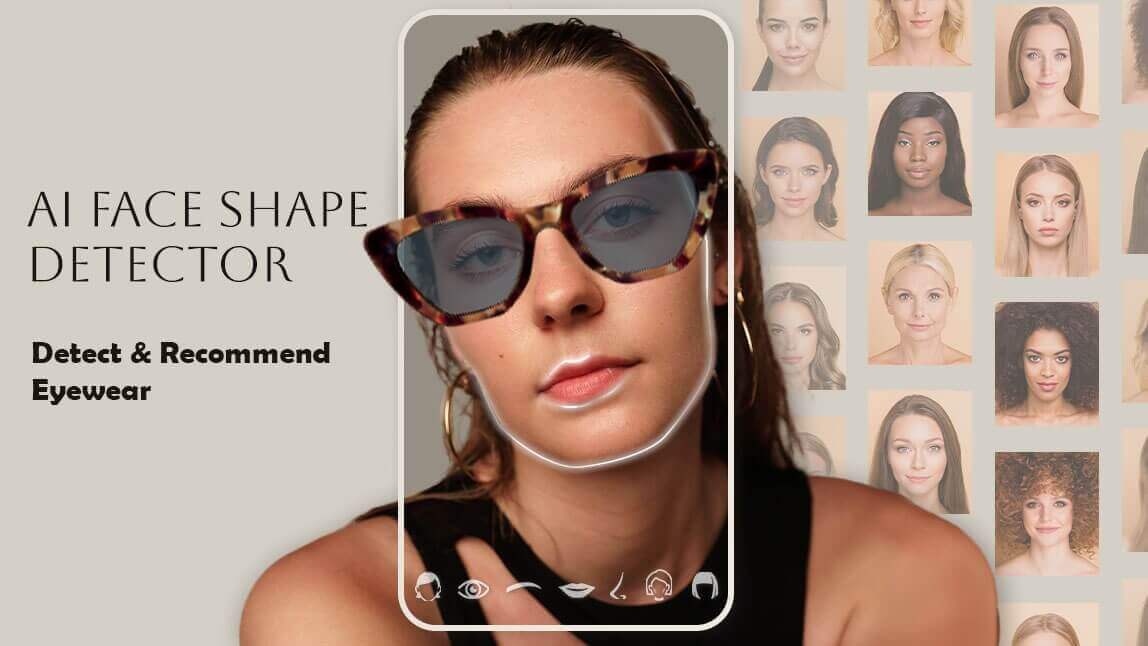
- Eyewear: Compare frame shapes, colors, and proportions before purchase.
The most valuable result is not a score. It is a clearer starting point for trying looks and making a personal choice.
Facial Symmetry for Beauty and Consultation Experiences
Beauty brands, eyewear retailers, salons, and consultation-based businesses can use optional symmetry insights to make digital discovery more relevant. A customer might choose to upload a photo, explore visible feature relationships, and then move to virtual try-on, product discovery, or an advisor-supported conversation.
Responsible implementation requires clear consent, understandable photo-use information, non-judgmental language, customer choice, and appropriate professional oversight where relevant. Results should be presented as visual context—not as a beauty ranking, diagnosis, or guaranteed outcome.
Contact Perfect Corp.’s team to discuss face analysis and virtual try-on experiences for web, mobile, in-store, or consultation journeys.
Frequently Asked Questions
What Is Facial Symmetry?
Facial symmetry describes how closely facial features on the left and right sides of the face align around a central vertical line. Most people have mild asymmetry, which is normal.
Is a Perfectly Symmetrical Face Possible?
Perfect mirror-image symmetry is not expected in real human faces. Small differences in feature height, shape, expression, and movement are common and can contribute to individuality.
How Can I Check My Face Symmetry?
You can use a clear, front-facing photo to compare paired features visually, or try a photo-based AI symmetry tool to organize visible feature relationships into a structured reference. Photo conditions can affect results.
What Causes Facial Asymmetry?
Facial asymmetry can reflect normal individual anatomy, expression patterns, natural growth, aging, injury, dental factors, or photo conditions. For a fuller explanation, see our asymmetrical face guide.
Can AI Face Symmetry Analysis Diagnose a Health Condition?
No. Photo-based facial symmetry analysis is not a medical diagnosis. Seek medical attention for sudden changes in facial appearance or movement, especially if they occur with weakness, numbness, speech changes, or vision changes.
Can Businesses Use Face Symmetry Analysis?
Yes. Beauty, hair, eyewear, and consultation-based businesses can use optional symmetry insights to support virtual try-on, personalized product discovery, education, and advisor-supported conversations.