 Author:



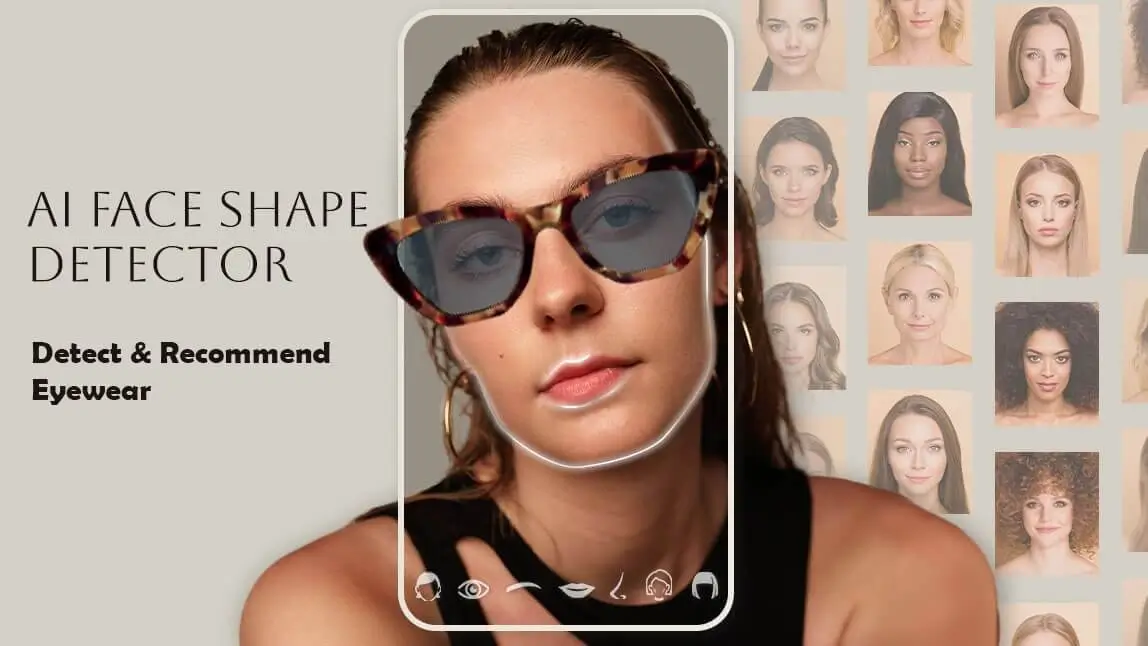
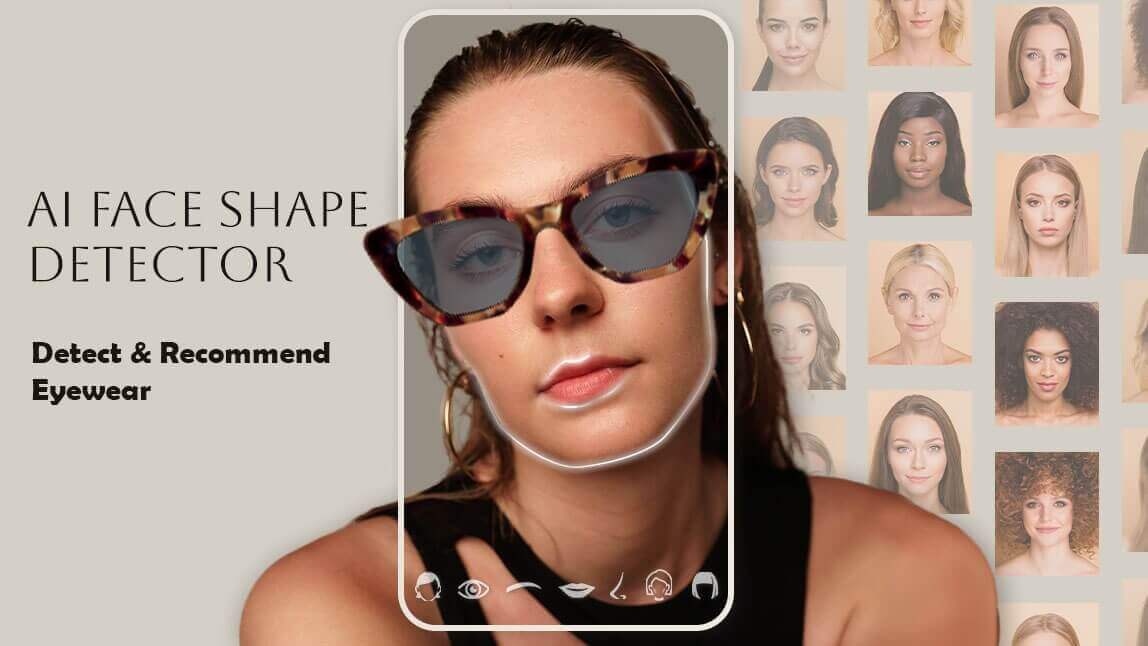
"What glasses suit my face?" usually has a simple starting answer: choose frames that contrast with your face shape and match your face's scale. Round faces tend to suit angular frames, square faces tend to suit rounder ones, and longer faces suit frames with more depth. A face shape detector for glasses automates the first step by measuring facial proportions from a camera image, then mapping the result to frame styles that shoppers can compare in a virtual try-on.
This guide explains the shape-to-frame rules opticians use, how AI turns a face scan into a frame suggestion, and where those rules stop being useful.
At a Glance
- The core rule is contrast: frame shapes that differ from the face's outline tend to balance it.
- Proportion matters as much as shape: frame width should roughly match the widest part of the face.
- AI face shape detection measures landmarks such as forehead, cheekbone and jaw width, plus face length, to classify a shape.
- Shape is a starting point. Fit, brow line, personal style and prescription needs all shape the final choice.
What Glasses Suit My Face? Start With Contrast and Proportion
Opticians tend to work from two principles. First, the frame shape should contrast with the face shape. Second, the frame size should be in scale with the face. UPMC HealthBeat suggests oval faces, for example, choose a frame "as wide as or wider than the broadest part" of the face.
Those two ideas are what a face shape detector for glasses has to encode: identify the outline, then recommend shapes and sizes that balance it.
Face Shape and Glasses Guide: Which Frames Suit Each Shape
The table below summarizes common recommendations from the optician sources above. Treat it as a set of starting suggestions, not fixed rules.
| Face shape | Typical proportions | Frames often recommended |
|---|---|---|
| Round | Similar width and length, soft curves | Angular or rectangular frames that are wider than they are deep |
| Square | Strong jaw, broad forehead, angular lines | Round, oval or curved frames to soften angles |
| Oval | Balanced proportions, slightly longer than wide | Most shapes, sized as wide as or wider than the broadest part of the face |
| Oblong | Noticeably longer than wide | Frames with more depth, which can visually shorten the face |
| Heart (base-up triangle) | Wider forehead, narrower chin | Frames that are wider at the bottom, light colors or rimless styles |
| Diamond | Widest at the cheekbones, narrower forehead and jaw | Oval, cat-eye, rimless or brow-line frames to soften the cheekbones |
| Triangle (base-down) | Narrow forehead, wider jaw | Top-heavy or cat-eye frames that add width at the brow |
Source: UPMC HealthBeat. Naming of heart and triangle shapes varies between sources.
How a Face Shape Detector for Glasses Maps Shapes to Frames

Step 1: Measure the face
Using a phone or computer camera, the AI locates facial landmarks and compares key measurements: forehead width, cheekbone width, jaw width and face length, along with the jawline's angle. These ratios are what separate a round face from an oval or oblong one.
Step 2: Classify the outline
The measurements are matched to the closest shape category, such as round, oval, square, heart or diamond. Many people sit between two shapes, so a well-designed tool should present the result as a best match rather than a verdict.
Step 3: Apply frame rules
The detected shape is mapped to frame attributes, such as angular versus curved, width versus depth, and where the visual weight sits. Combined with the face's overall width, those attributes narrow a catalog to a shortlist of styles worth trying.
Step 4: Let the shopper compare
Recommendations are most useful when shoppers can see them on their own face. Pairing the shortlist with virtual try-on lets people judge proportion and style before visiting a store or checking out.
Beyond Face Shape: Fit, Brows and Personal Features
Shape guidance only works if the frame also fits. UPMC HealthBeat highlights three measurements: lens width, which helps frames match face width; bridge width, which affects how glasses sit on the nose; and temple length, where a poor fit can cause discomfort or slipping. Our guide on how glasses should fit covers each point in more detail.
Brow line also matters. The top of the frame generally reads best when it follows the natural brow curve, as explained in how glasses should line up with eyebrows. Color is a final lever: Eyewear can echo a personal feature, such as a frame color that matches eye color.
Where Face-Shape Rules Fall Short
- Mixed shapes are common. Many faces combine traits, so rules should suggest options rather than exclude styles.
- Style is personal. Some people deliberately choose frames that echo their face shape, and that is a valid choice.
- Prescriptions add constraints. Strong prescriptions or progressive lenses can limit frame size and shape, which an optician should confirm.
- Language matters. Recommendations should describe what a frame does, such as "adds definition," rather than framing any face shape as a flaw.
How Perfect Corp Supports Shape-Based Frame Recommendations
Perfect Corp's AI Face Analyzer can detect face shape as part of an analysis of more than 70 facial features, and is available as a web module, API, mobile app SDK or in-store consultation tool. The face shape detector demo shows how results can feed eyewear style suggestions, such as angular or rectangular frames for round faces.
Recommendations can then be tested with AR virtual try-on for glasses, which supports glasses, sunglasses and goggles and can measure pupillary distance automatically. For how retailers build these tools into product pages, apps and in-store journeys, see our AI face shape finder for eyewear guide.

Help Shoppers Find Glasses That Suit Their Face
Perfect Corp's face shape detection and AR eyewear try-on can help your customers move from "what glasses suit my face?" to a confident shortlist. Talk to our team about bringing shape-based frame recommendations to your website, app or store.