 Author:



Your barista already remembers your oat milk latte. Soon, the drive-thru might too. When Starbucks told investors it is exploring ways to recognize participating customers as they arrive, headlines jumped straight to "facial recognition." The real story is more nuanced, and far more useful for anyone running a store, a restaurant brand, or a beauty counter.
Facial recognition in retail sits at the crossroads of two things shoppers want badly: speed and personalization. It also triggers the thing they fear most: being tracked without permission. This guide unpacks what Starbucks actually said, how retailers use face technology today, why regulators are watching, and how AI face analysis (which reads facial attributes without identifying anyone) can deliver personalization without the surveillance baggage.
Table of Contents
- What Did Starbucks Actually Announce About Customer Recognition?
- What Is the Difference Between Facial Recognition and Face Analysis?
- How Are Retailers and Restaurants Using Facial Recognition Today?
- Why Is Facial Recognition in Retail So Controversial?
- How Can Face Analysis Personalize Retail Without Identifying Anyone?
- How Does Perfect Corp.'s AI Face Analyzer Work?
- What Should a Privacy-First Face Tech Checklist Include?
- Frequently Asked Questions
What Did Starbucks Actually Announce?
On its fiscal fourth-quarter 2026 earnings call, Starbucks chairman and CEO Brian Niccol said the company is exploring experiences that recognize participating customers as they arrive, present personalized digital menus, and make payment more effortless. Separately, Starbucks plans to begin testing background AI models in drive-thrus during fiscal 2027 to help employees enter orders more accurately.
Here is what matters for anyone quoting this news:
- Starbucks did not say it will use facial recognition. It has not named the sensors, account signals, or other technology it is considering. Possible methods discussed in coverage range from app detection and license plates to Bluetooth proximity and face matching.
- The word "participating" signals opt-in. But details on consent, data retention, and test locations have not been disclosed.
- It is early. Testing is slated for fiscal 2027, so this is a direction of travel, not a rollout.
Even so, the reaction was instant, with privacy questions dominating the conversation. That tells retail leaders something important: customers are open to speed and personalization, but they want to know exactly how they are being recognized. Sources: Starbucks Q4 and full fiscal year 2026 results and NetNewsLedger's analysis.
What Is the Difference Between Facial Recognition and Face Analysis?
This is the single most misunderstood point in the whole debate. "Face tech" is not one thing. It splits into two very different jobs.
Facial recognition answers the question "Who is this person?" It converts a face into a biometric template and compares it against a database of known faces to identify or verify an individual. Think face pay, VIP alerts, or watchlists.
Face analysis answers a different question: "What are this face's visible attributes?" It reads characteristics such as face shape, skin tone, eye color, or facial proportions in a single image, then uses them to recommend products. It does not need to know, and does not try to determine, who the person is.
| Question | Facial Recognition (Identity) | Face Analysis (Attributes) |
|---|---|---|
| Core job | Identify or verify a specific person | Describe visible features like face shape and skin tone |
| Needs a database of known faces? | Yes, to match against | No, it reads one image at a time |
| Typical retail uses | Face pay, loss prevention, VIP alerts, age verification | Shade matching, eyewear and hairstyle advice, virtual try-on |
| Customer starts it? | Often passive (cameras) | Typically active (user takes a selfie) |
| Privacy risk profile | High: tracking and misidentification concerns | Lower when opt-in and not linked to identity, but still needs consent and clear data handling |
The takeaway: a brand can deliver highly personalized experiences without ever answering "who are you?" That is exactly the lane Perfect Corp.'s AI Face Analyzer plays in. It is an attribute analysis tool, not an identity recognition system.
How Are Retailers and Restaurants Using Facial Recognition Today?
Across the top-ranking coverage of this topic, four use cases keep showing up. Each solves a real problem. Each also comes with a different level of privacy risk.
Is Loss Prevention the Biggest Use Case?
Yes, by most accounts. Retailers use recognition systems to flag people previously linked to theft. It is also the use that draws the most scrutiny, because false matches can lead to customers being wrongly confronted.
Can Customers Pay With Their Face?
Face and other biometric payments are being piloted in convenience stores, stadiums, and quick-service restaurants in several markets. Starbucks itself has previously tested palm-based payment in partnership with Amazon. The appeal is obvious: no wallet, no phone, no line.
How Do Loyalty and VIP Programs Use Recognition?
Some luxury and hospitality brands explore recognizing enrolled members on arrival so staff can greet them by name or pull up preferences. When it is strictly opt-in, customers often like it. When it is not, it feels creepy fast.
What About Age Verification?
Age estimation at self-checkout for restricted items like alcohol is gaining ground in some markets. Note that age estimation can work without identifying anyone, which brings it closer to face analysis than to recognition.
Why Is Facial Recognition in Retail So Controversial?

Because a face is not a password. You can reset a password. You cannot reset your face. That is why regulators treat biometric identifiers so seriously.
- Consent laws: Illinois' Biometric Information Privacy Act (BIPA) requires informed written consent before collecting biometric identifiers, and it has fueled major class actions.
- Local bans: In 2020, Portland, Oregon banned private entities from using facial recognition in places of public accommodation, including stores and restaurants.
- Enforcement: In 2023, the U.S. Federal Trade Commission banned Rite Aid from using facial recognition for surveillance for five years, alleging its system falsely flagged customers.
- Europe: The EU AI Act classifies remote biometric identification as high-risk and prohibits some uses outright.
Add accuracy and bias concerns, and you get a technology that can damage trust faster than it builds loyalty. The lesson for brand innovators is not "avoid face tech." It is "choose the right kind, and be radically transparent about it."
Want a deeper look at attribute-based personalization done responsibly? Read our facial analysis personalization guide for beauty brands.
How Can Face Analysis Personalize Retail Without Identifying Anyone?

Here is the twist most "facial recognition in retail" articles miss: a lot of the personalization brands want does not require identity at all. A shopper who wants the right foundation shade, a flattering frame, or a hairstyle that suits her face does not need to be recognized. She needs to be understood, in that moment, with her permission.
Beauty Counters and Shade Matching
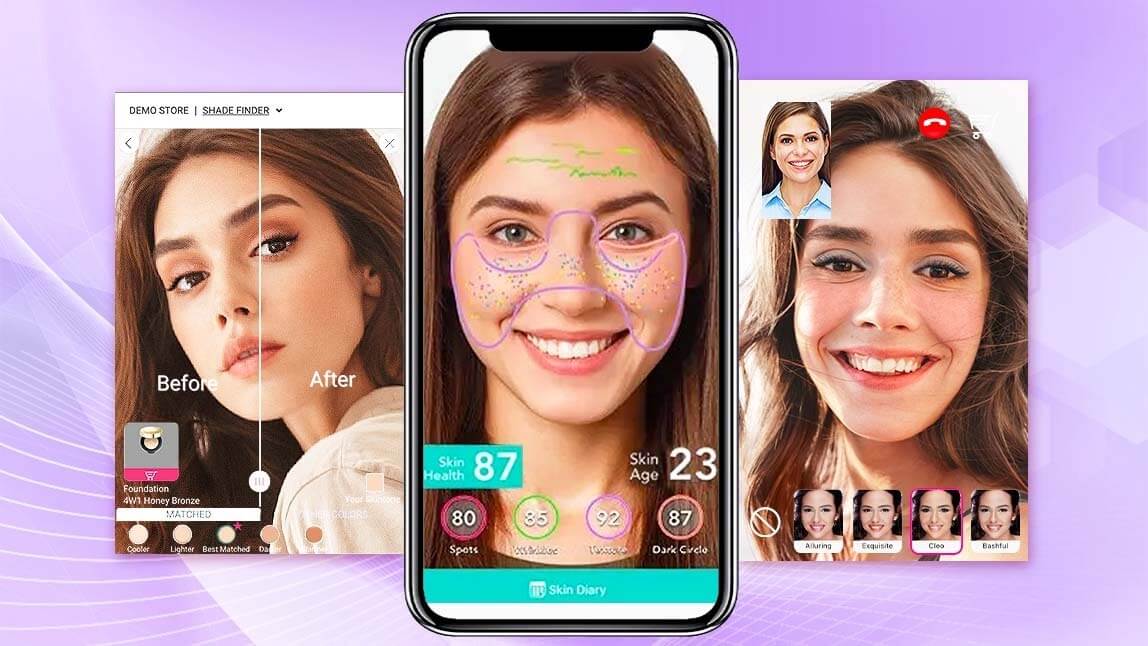
A customer takes a selfie at a kiosk or on her phone. Face analysis reads skin tone, undertone, and feature colors, then suggests shades. Pair it with an AI skin shade finder and virtual try-on, and the guesswork disappears.
Eyewear, Hair, and Accessories
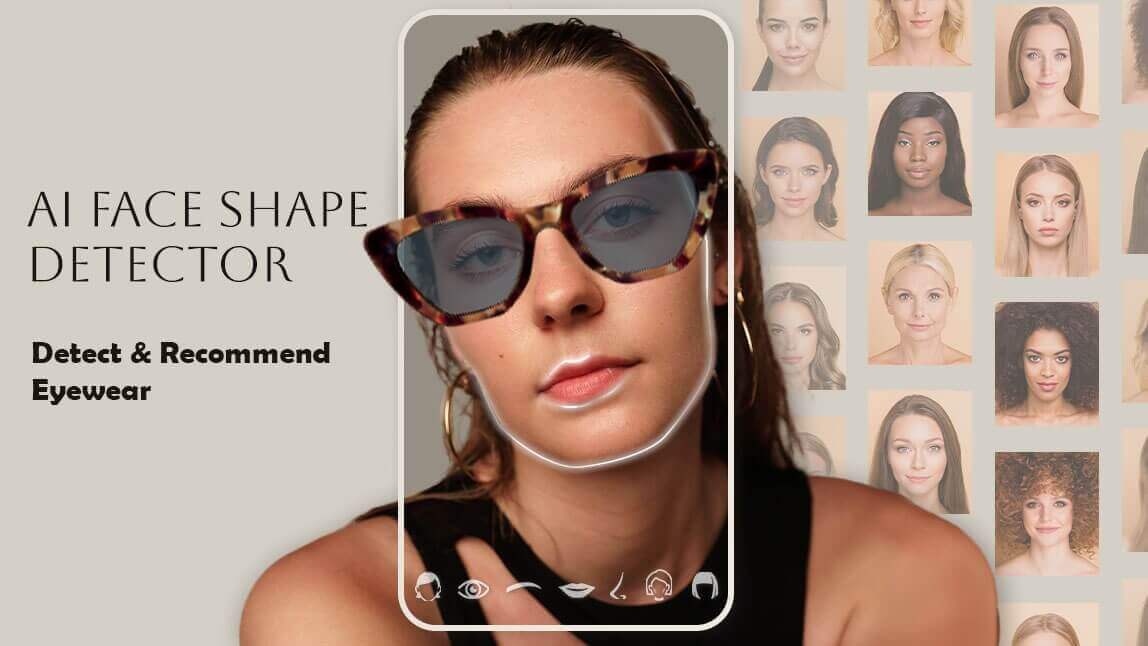
Face shape and proportions translate neatly into frame, haircut, and earring recommendations. Optical retailers can connect results to virtual glasses try-on so customers see the suggestion on their own face.
Food, Beverage, and Lifestyle Brand Activations
For restaurant and beverage brands, everyday menu personalization is best handled through opt-in app accounts and order history, not faces. Where face analysis shines is in experiential moments: co-branded beauty pop-ups, campaign kiosks, or merch and color collaborations where a selfie unlocks a "your palette" recommendation. Fun, shareable, and no identity matching required.
Explore AI Face Solutions: Try the Face Analyzer Demo
How Does Perfect Corp.'s AI Face Analyzer Work?
Simple for the shopper, rich for the brand. The flow is three steps: a customer takes or uploads a selfie, the AI analyzes visible attributes, and your recommendation logic maps those results to products, looks, or services.
| Analysis Category | What It Detects | Retail Payoff |
|---|---|---|
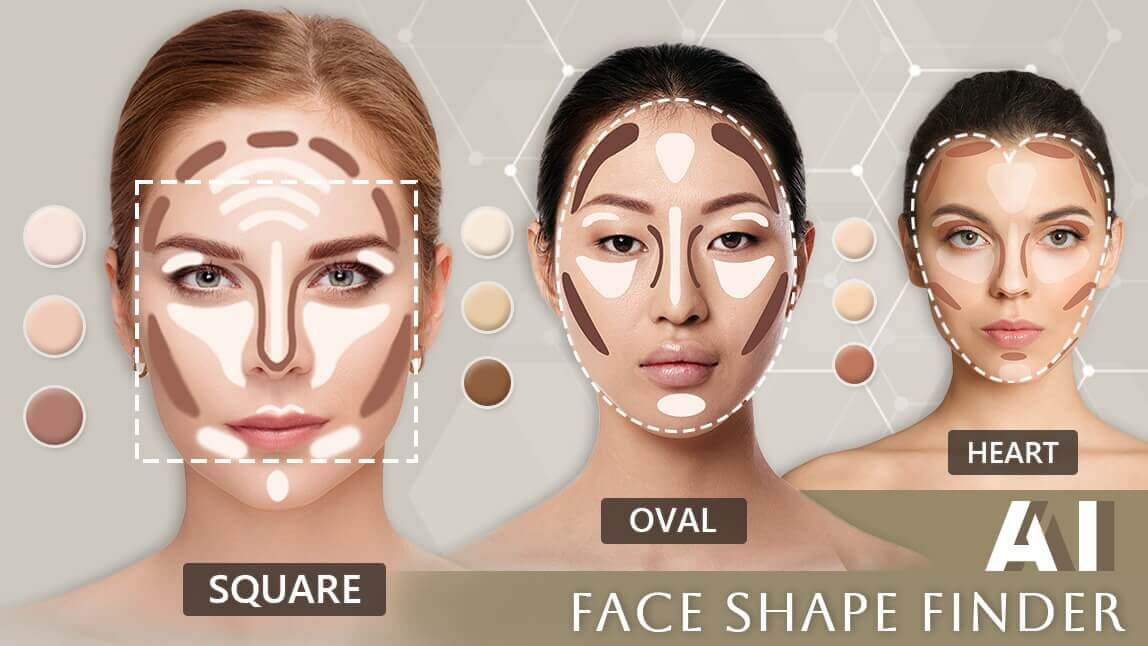
| Face Attributes | 70+ facial features, including face, eye, eyebrow, lip, nose, and cheekbone shapes | Makeup technique, hairstyle, and eyewear recommendations |
| Personal Color | Skin tone plus eye, eyebrow, lip, and hair color (13+ eye and hair color categories) | Shade matching and color-coordinated product suggestions |
| Face Ratios | 11 key facial proportions, including facial thirds, fifths, and symmetry | Personalized styling and consultation starting points |
In total, the analyzer covers 100+ facial attributes and was trained on 100,000+ diverse face samples across genders, ages, and ethnic backgrounds. It is available as a web module, API, mobile SDK, and in-store consultation tool. Developers can also access face analysis through the YouCam AI API, including MCP and Agent Skills workflows for AI assistants.
What it is not: the AI Face Analyzer does not identify who a person is and is not a facial recognition system. It describes facial attributes to power recommendations. For specifics on data processing and retention for your deployment, see the product documentation or talk to our team.
What Should a Privacy-First Face Tech Checklist Include?
Whether you are piloting recognition at the drive-thru or attribute analysis at the beauty counter, these questions belong on every launch plan:
- Do we actually need identity? If the goal is a better recommendation, attribute analysis may do the job with far less risk.
- Is it opt-in and customer-initiated? A selfie the customer chooses to take beats a camera they never noticed.
- Is the purpose explained in plain language? Tell people why you need the image and what they get in return.
- How long is data kept, and where? Define retention and storage up front, and publish it.
- Is there an easy opt-out? Customers should get the same service without scanning their face.
- Is the model tested across diverse faces? Ask vendors about training data diversity and accuracy across skin tones, ages, and genders.
- Which laws apply? Map BIPA, state privacy laws, GDPR, and the EU AI Act to every market you operate in.
Get these right, and face technology becomes a trust builder instead of a headline risk.
What's Next for Facial Recognition in Retail?
Starbucks' exploration is a signal, not a verdict. Expect more retailers and restaurant chains to test recognition for speed and convenience, and expect customers and regulators to keep asking hard questions about consent. The brands that win will separate two ideas clearly: recognizing who someone is, and understanding what suits them. The second one can start today, opt-in, with no identity required.
Curious how attribute-based face AI fits into Perfect Corp.'s broader technology stack? Explore our Face AI technology.
Explore AI Face Solutions: Talk to Our Team
Frequently Asked Questions
Is Starbucks using facial recognition?
Not as of its latest disclosures. On its Q4 fiscal 2026 earnings call, Starbucks said it is exploring ways to recognize participating customers on arrival, with personalized menus and easier payment. It did not say the method would be facial recognition, and testing of related AI in drive-thrus is planned for fiscal 2027.
How is facial recognition used in retail stores?
The most common uses are loss prevention, biometric payments, VIP or loyalty recognition, and age verification at self-checkout. Each involves different levels of privacy risk, and many require explicit consent under laws such as Illinois' BIPA.
Is facial recognition in retail legal?
It depends on where you operate. Some U.S. states require written consent for biometric data, some cities restrict private use, and the EU AI Act regulates remote biometric identification as high-risk. Always get legal review before deployment.
What is the difference between facial recognition and face analysis?
Facial recognition identifies or verifies a specific person by matching a face against stored templates. Face analysis describes visible attributes like face shape, skin tone, or proportions to power recommendations, without determining who the person is.
Does Perfect Corp.'s AI Face Analyzer identify customers?
No. The AI Face Analyzer analyzes facial attributes, personal color, and facial ratios to support personalized product recommendations. It is not an identity recognition system.
Can face technology improve the customer experience without hurting privacy?
Yes, when it is opt-in, customer-initiated, transparent about data use, and focused on attributes rather than identity. A selfie-based shade match or frame recommendation is a good example.
How do retailers get started with AI face analysis?
Start with a single high-intent journey, such as shade matching or eyewear selection, try a demo, and then integrate via web module, API, SDK, or in-store kiosk. Perfect Corp.'s team can help map results to your catalog.