 Author:



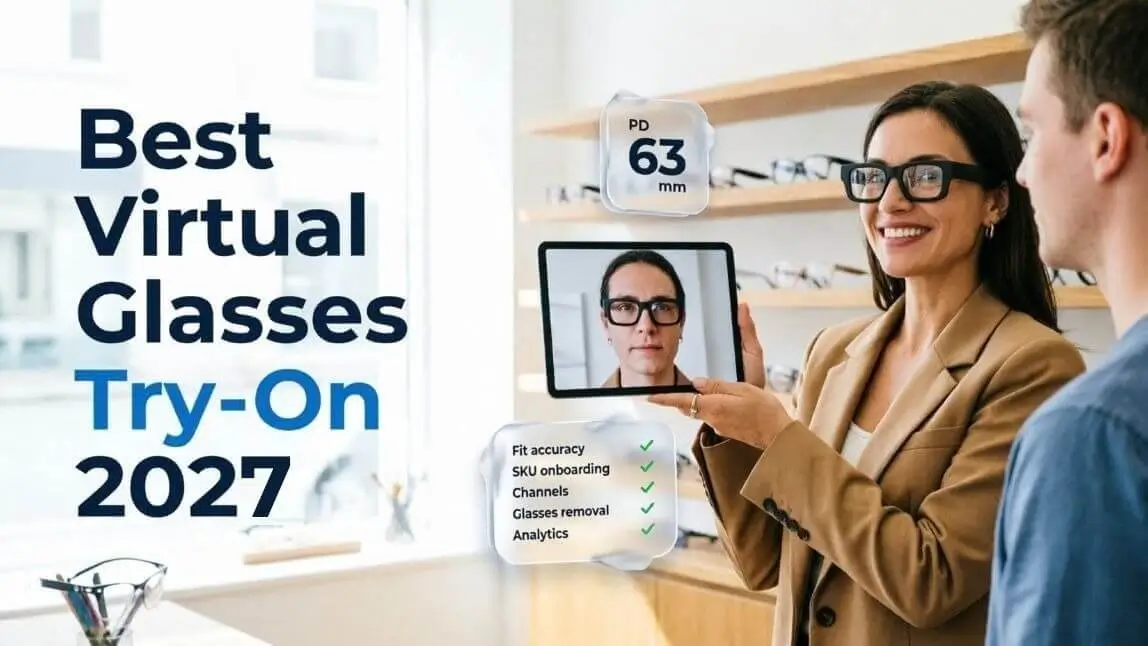
*Images designed by YouCam AI
Summary
Every eyewear site now has a "Try On" button. Very few of them actually sell glasses.
The gap is not the AR. It is everything around it: whether the frame shows up at its real size, whether your 2,000 SKUs can go live this quarter (not next year), whether shoppers who already wear glasses can see anything at all, and whether the same engine runs on your site, your app and the iPad in your store.
This guide is written for the people who sign the contract: e-commerce leads, optical chain owners and eyewear brand managers. We compare six virtual glasses try-on platforms that keep showing up on 2027 shortlists, using the features each vendor publishes today. Then we give you a 30-day pilot scorecard, because the best virtual glasses try-on is the one that wins on your own frames, not in a vendor's demo video.
Table of Contents
- What makes a virtual glasses try-on the "best" for an eyewear business?
- Which virtual glasses try-on platforms should be on your 2026 shortlist?
- How do the top platforms compare side by side?
- Should you build your own try-on or buy one?
- How do you run a 30-day pilot that picks the right platform?
- Which KPIs prove a virtual glasses try-on is paying off?
- Best Virtual Glasses Try-On FAQ
Which Virtual Glasses Try-On Platforms Should Be on Your 2027 Shortlist?

Search for the best virtual glasses try-on and you will find dozens of consumer app lists. That is not your problem. Your problem is which engine to put behind your try-on button. These six platforms are the names B2B buyers most often compare in 2026. Feature notes reflect what each vendor publicly lists as of November 2026, so confirm details in a demo.
1. Perfect Corp.: Best for Fit Accuracy at Catalog Scale Across Every Channel

Perfect Corp. built its reputation on AI face analysis for global beauty brands, and that face engine is exactly what eyewear needs: accurate facial detection, real-time frame fitting and stable rendering on ordinary phone cameras. Its AI glasses and sunglasses virtual try-on focuses on the four things that move eyewear revenue: fit, frame discovery, onboarding speed and reach.
- AI PD auto detection: pupillary distance is measured from a standard camera, so frames are scaled to the shopper's real face without a credit card on the forehead.
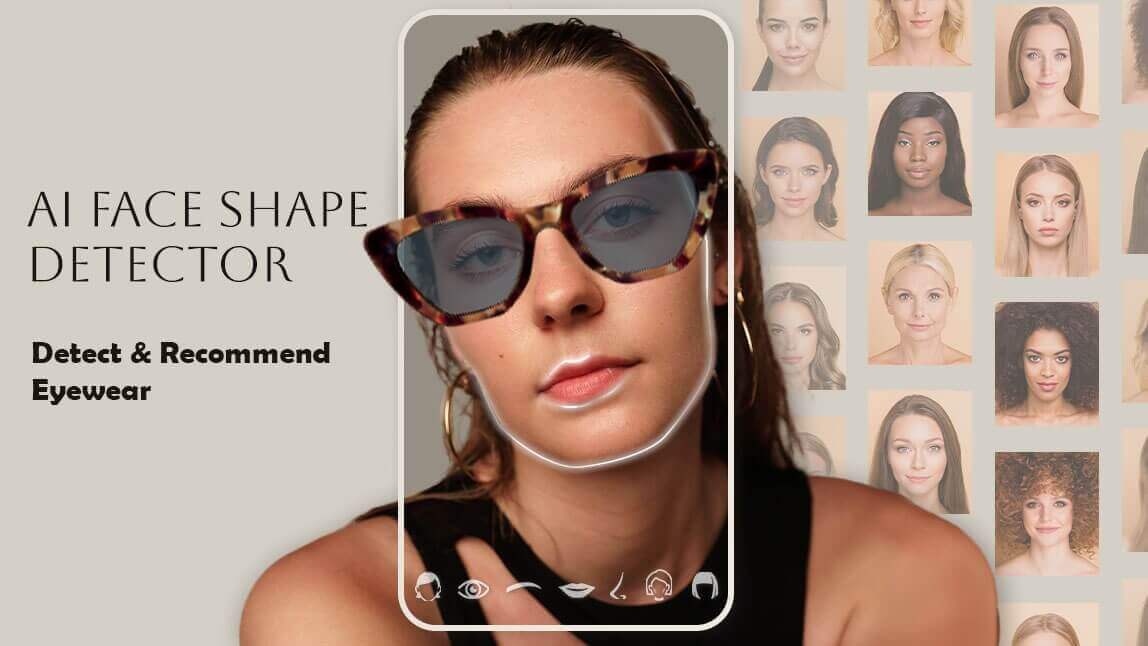
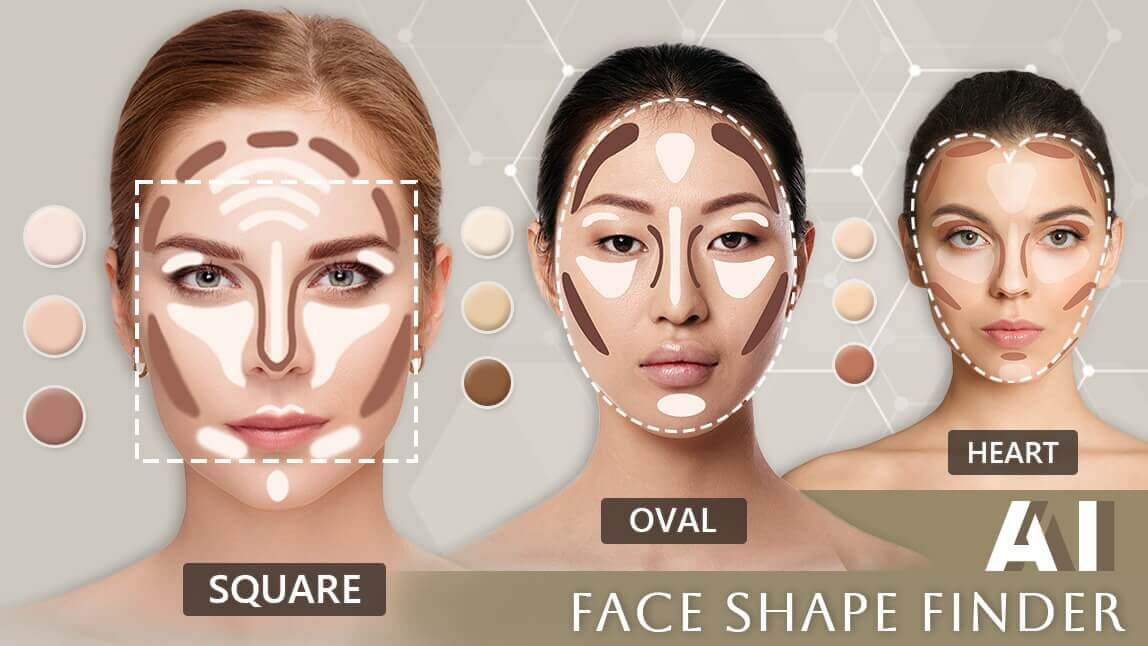
- AI face shape detection: the camera detects the shopper's face shape (oval, round, square, heart and more), so shoppers start from flattering options instead of scrolling the whole catalog.
- AI Glasses Removal: erases the shopper's current glasses in live camera or photo mode before applying the new frame, built for prescription wearers.
- Three images per SKU: brands create a virtual frame from three flat product images, preview it in an AR editor, then publish from one console.
- 13,000+ pre-loaded SKUs: an in-platform glasses library, announced in October 2025, lets retailers pull existing frames instead of digitizing everything.
- Realism controls: frame color, size and reflection, plus lens tint, density and reflection.
- Channels: e-commerce web module for mobile and desktop browsers, mobile SDK, and in-store consultation.
Two extras matter for merchandisers. First, petite glasses frames try-on with AI fit technology scales narrow and small frames accurately, a segment where generic try-ons tend to oversize. Second, the same platform runs makeup, jewelry and watch try-on, so multi-category retailers do not need a second vendor.
Best for: eyewear brands, optical chains and multi-category retailers that want accurate fit, face-shape-based frame recommendations, fast SKU onboarding and one engine for web, app and store.
2. Fittingbox: Best for Pre-Digitized Frame Coverage

Fittingbox is one of the oldest names in eyewear virtual try-on and leans hard into its digital frame database, which it lists at 195,000+ references across 1,200+ brands. It matches that database against your inventory.
- Website try-on in Standard (plug-and-play) and Advanced (customizable) versions, plus a Shopify app.
- Live and photo-based try-on; HTML5.
- Optical measurements (PD) and lens demonstration sold in its separate Optical Fit line.
- In-store solutions for opticians.
Best for: multi-brand optical retailers whose catalog is mostly well-known third-party frames.
3. Auglio: Best for Shopify-First Eyewear Stores Wanting Bolt-On Selling Tools

Auglio is an eyewear-focused try-on vendor that bundles conversion add-ons around the mirror. Its published product list includes auto PD measurement, "invisible glasses" (try on without removing your own), 360° view, photochromic lens simulation, face shape detection and social/assisted shopping. Auglio publishes a Shopify starter plan, and says it supports Shopify, WooCommerce, Magento and PrestaShop.
Best for: small and mid-size online stores.
4. GlamAR: Best for Brands Already in the Fynd Retail Stack

GlamAR, part of the Fynd product portfolio, offers eyewear try-on alongside beauty and accessories. It provides Shopify plugins and SDKs, says it integrates with Shopify, WooCommerce, Magento and custom stacks, and lists automated PD measurement for size guidance (it notes this is not a replacement for professional optical measurement).
Best for: retailers already using Fynd commerce tools.
5. Banuba: Best for In-House Dev Teams Building a Custom Experience

Banuba is primarily a face AR SDK. Its eyewear stack includes occlusion, PD measurement and glasses removal, across Web, iOS, Android, Unity, Flutter and React Native. In 2026 it added one-photo eyewear digitization and contact lens try-on to its Shopify plugin.
Best for: brands with engineers who want to build their own app experience from components.
6. GlassOn: Low-Cost Starter for Small Shopify Catalogs

GlassOn is a Shopify app with a 360° view and a face measurement tool (PD, face width, nose bridge). Its Shopify listing shows a free starter (up to 10 frames, two months), Growth at $49/month (up to 50 frames) and Enterprise at $199/month (up to 300 frames).
Best for: indie stores testing try-on on a few dozen frames.
Want to see the fit tech on a real face? Open the virtual glasses try-on web demo on your phone and test it with your current glasses on.
What Makes a Virtual Glasses Try-On the "Best" for an Eyewear Business?

A shopper judges a try-on in about three seconds. Does the frame stick to the nose when they turn their head? Does it look like their size? If not, the tab closes. Your team, however, needs to judge it on a much longer list.
Here is the six-point lens we use for every platform in this guide:
| Criterion | The question to ask the vendor | Why it matters to revenue |
|---|---|---|
| Fit accuracy | How do you know the real scale of the face, and is PD measured automatically or with a card? | A 50 mm and a 54 mm lens look identical without scale. Wrong size equals returns. |
| Realism | Do temples hide behind the head? Do lens tint and reflections render? | Floating "sticker glasses" erode trust in the whole product page. |
| Glasses-wearer mode | Can shoppers keep their own glasses on? | Your core buyers often cannot see the screen without their current pair. |
| Catalog onboarding | How many images per SKU, how long per SKU, and is there a pre-digitized library? | A try-on that covers 30 hero frames is a demo, not a sales channel. |
| Channel coverage | Web, native app SDK, in-store tablet, social? One console or four? | Shoppers jump channels. Your try-on should follow them. |
| Data and privacy | What analytics do we get, and what happens to face data? | No data, no optimization. Unclear privacy, no legal sign-off. |
Keep this table open. Every section below maps back to it.
How Do the Top Virtual Glasses Try-On Platforms Compare Side by Side?

| Platform | Type | PD measurement | Glasses-wearer mode | SKU onboarding | Channels |
|---|---|---|---|---|---|
| Perfect Corp. | Full platform (eyewear + beauty + accessories) | AI auto PD, no card needed | AI Glasses Removal (live + photo) | 3 flat images; 13,000+ SKU library | Web module, mobile SDK, WeChat, in-store; Shopify/Wix/Squarespace |
| Fittingbox | Eyewear specialist | Via Optical Fit line | Not stated on main try-on page | Frame database; 3D studio | Website, Shopify app, in-store |
| Auglio | Eyewear specialist | Auto PD (Basic plan and up) | "Invisible glasses" | Pre-digitized frames + 3D tiers | Shopify, WooCommerce, Magento, PrestaShop, in-store |
| GlamAR | Multi-category | Automated PD (guidance) | Not stated | Vendor-assisted | Shopify plugin, SDKs, major e-commerce platforms |
| Banuba | Developer SDK | Yes, no reference object | Glasses removal | One-photo digitization (2026) | Web, iOS, Android, Unity, Flutter, React Native |
| GlassOn | Starter app | Face measurement tool (Growth plan) | Removal supported | 2 photos, under 24 hours | Shopify |
Notice the pattern. The specialists win on frame databases, the SDKs win on flexibility and the starters win on price. The real question is which platform covers fit, onboarding and channels at once, without stitching three vendors together.
Should You Build Your Own Virtual Glasses Try-On or Buy One?

Warby Parker famously built its own try-on: it launched in 2019 on Apple's ARKit and TrueDepth camera, and today adds frame-width guidance and a "Glasses Eraser" that hides the shopper's real glasses. It is a great experience, and a useful reminder of what in-house really costs: a dedicated computer vision team, years of iteration and an iPhone-first starting point.
| | Build in-house | Buy a platform |
|---|---|---|
| Time to launch | Many months to years | Weeks for web; longer for custom app SDK work |
| Team | CV/ML engineers, 3D artists, QA | E-commerce team plus vendor support |
| Device reach | Often starts on one platform | Browser, iOS, Android and in-store from day one |
| Roadmap | You fund every new feature | Glasses removal, PD and frame libraries arrive as updates |
For most brands the smart move is to buy the engine and own the experience: your UI, your merchandising, your data. Teams that want to go further can add face-shape recommendations with AI face analysis or prototype new features in the YouCam AI API playground.
How Do You Run a 30-Day Pilot That Picks the Right Virtual Glasses Try-On?

Vendor demos use perfect lighting, perfect faces and perfect frames. Your shoppers do not. Shortlist two or three platforms and put them through the same four weeks.
Week 1: Can It Handle Your Hardest 20 Frames?

Skip the easy black rectangles. Send rimless frames, clear acetate, thin metal, gradient sunglasses and petite sizes. Time how long each vendor takes per SKU and how many rounds of fixes it needs.
Week 2: Is the Fit Honest on Real Faces?

Recruit 15 to 20 staff and customers across face sizes, skin tones and ages, including people who wear glasses. Compare each tool's PD reading with your optician's measurement, and check whether frames look the right width. This is where AI PD and glasses removal earn their keep.
Week 3: Does It Convert in a Live A/B Test?

Turn the try-on on for half your traffic on a defined set of product pages. Measure engagement, add-to-cart and conversion against the control group. Do not trust anyone's industry average. Trust your own split test.
Week 4: Will It Scale to Every Channel?

Ask each vendor to show the same SKU on your website, in your app (or a test app) and on an in-store tablet. Check the admin console: can one person publish a new frame everywhere in one step? Then get the privacy and data-retention answers in writing.
| Pilot scorecard item | Weight | Vendor A | Vendor B | Vendor C |
|---|---|---|---|---|
| Fit accuracy (PD vs. optician) | 25% | | | |
| Realism on hard frames | 20% | | | |
| Glasses-wearer experience | 15% | | | |
| Time and cost per SKU | 15% | | | |
| Channel coverage | 15% | | | |
| Analytics and privacy | 10% | | | |
Want Perfect Corp. in your pilot? Smaller stores can start with the self-serve virtual glasses try-on for Shopify, Wix and Squarespace and a 30-day free trial.
Which KPIs Prove a Virtual Glasses Try-On Is Paying Off?

A try-on is not a feature. It is a funnel. Track it like one.
- Try-on engagement rate: share of product-page visitors who open the try-on. Low numbers usually mean the button is hidden or loads slowly.
- Frames tried per session: a proxy for discovery. More frames tried often means shoppers are exploring beyond the hero product.
- Add-to-cart and conversion (try-on users vs. non-users): the headline number for your CFO.
- Size-related return rate: the quiet win. Accurate PD and true-to-size scaling target "too big, too small" returns.
- Average order value: watch for second pairs and sunglasses add-ons once shoppers can see combinations on their face.
- In-store assisted sales: for optical chains, track consultations that used the tablet try-on.
Want more context on where AI and AR are heading across retail? Our complete guide to beauty tech maps the bigger picture.
Best Virtual Glasses Try-On FAQ
What is the best virtual glasses try-on for eyewear businesses?
It depends on your catalog and channels. Perfect Corp. is strong for brands that want AI PD, glasses removal, fast three-image SKU setup and one engine for web, app and store. Fittingbox suits retailers relying on its large frame database, Auglio and GlassOn suit Shopify-first stores, and Banuba suits teams building custom apps.
How accurate is virtual glasses try-on?
Accuracy depends on scale. Tools that measure pupillary distance automatically or use depth sensing can render frames close to real size; tools without a scale reference only approximate. Test PD readings against an optician during a pilot, and keep professional measurement for prescription orders.
How much does virtual glasses try-on software cost?
Published prices typically range from self-service SaaS tiers for small-to-medium businesses to custom enterprise contracts. For example, Perfect Corp. offers self-service eyewear try-on plans starting at $359 to $499 per month (with tiered Essential and Premium options based on SKU limits and features), while enterprise-level deployments across mobile SDKs, web, and in-store channels require custom quotes based on SKU count, traffic, and platform integration.
Can shoppers try on glasses virtually while wearing their own glasses?
Yes, with the right tool. Perfect Corp.'s AI Glasses Removal erases the shopper's real glasses in live or photo mode before applying the new frame. Several other vendors list similar features, so test them on strong prescriptions and thick frames.
How do you add virtual glasses try-on to a Shopify store?
Install a try-on app or plugin, create virtual SKUs from product images or a pre-digitized library, then add a "Try On" button to product pages. Perfect Corp. offers a ready-to-use Shopify plugin plus installation guides for Wix and Squarespace.
How many product images do you need to create a virtual glasses SKU?
It varies by vendor. Perfect Corp. creates a virtual frame from three flat images, GlassOn uses two photos, and some vendors offer one-photo AI digitization or full 3D scanning for premium quality.
Does virtual try-on reduce eyewear returns?
It can, mainly by reducing size and style mismatches. Accurate PD measurement and true-to-size scaling help shoppers avoid frames that are too wide or too narrow. Measure it with a before-and-after or A/B comparison of size-related returns.
Is virtual glasses try-on safe for customer privacy?
It should be, but ask. Request written answers on whether face images are stored, where processing happens, retention periods and consent flows, and make sure they match your local regulations before launch.
The Best Virtual Glasses Try-On Is the One That Sells Your Frames

Fancy AR is table stakes. The winners in 2026 measure faces honestly, respect shoppers who already wear glasses, put the whole catalog online fast and follow customers from phone to store. Run the pilot, score it on your frames, and let the numbers pick the platform.
Ready to see it with your own collection? Contact Perfect Corp. sales for a virtual glasses try-on demo.