Author:



Disclaimer: Some images in this article may have been created or modified by AI
The first gray hairs usually trigger one question: hide them or own them? Then the questions multiply. Which shade covers best? Will dark brown make you look older? How do you stop that bright regrowth line from showing up two weeks after every appointment? And is going silver really as freeing as everyone on social media says?
The truth is that the best hair color for gray hair is not one shade. It is a decision based on how much gray you have, your base color, your skin tone, and how often you want to visit the salon. This guide walks you through that decision with a simple framework, the best shades for covering, blending, and going silver, and a way to preview each path on your own face before you commit. Whether you call it gray or grey, you will leave with a plan.

In this guide:
- What is the best hair color for gray hair?
- How much gray do you have?
- Should you cover, blend, or go silver?
- What are the best colors to cover gray hair?
- What are the best gray blending techniques?
- How do you go silver gracefully?
- How does skin tone change the best color?
- Why is gray hair hard to cover?
- How much upkeep does each option need?
- How can you preview gray, colored, or blended hair?
- Why does AI try-on matter for gray coverage brands?
- FAQ
What Is the Best Hair Color for Gray Hair?
The best hair color for gray hair is usually a shade one to two levels lighter than your natural color. Lighter shades like champagne blonde, beige blonde, caramel, and light brown hide regrowth far better than dark brown or black. If you are under 25% gray, blend with highlights or a gloss. Over 50% gray, consider blonde or embracing silver.
Why lighter? Because gray roots against a light shade create a soft line, while gray roots against dark brown create a stripe. The less contrast between your gray and your color, the longer you can go between appointments.
How Much Gray Do You Have?
Start here. The percentage of gray you have narrows your options faster than anything else. Part your hair in a few places in daylight and estimate roughly how many strands are gray.

See yourself with gray, blonde or brown in the hair color demo
| Gray percentage | What it looks like | Best approach | Best shades |
|---|---|---|---|
| Under 25% | Scattered strands, mostly at the temples or part | Blend | Demi-permanent gloss in your natural shade, babylights |
| 25 to 50% | Visible salt and pepper, especially at the hairline | Blend or cover | Highlights plus lowlights, or permanent color one level lighter than natural |
| 50 to 75% | More gray than pigment in many areas | Lighten or transition | Champagne, beige blonde, dark neutral blonde, heavy highlights |
| Over 75% | Mostly gray or white | Go silver or go light | Silver toner, icy platinum, pearl blonde, or full natural gray |
One more factor: where the gray sits. Gray concentrated at the temples and front hairline is the most visible, so many people choose to brighten the front with face-framing highlights and leave the back more natural.
Should You Cover, Blend, or Go Silver?
There is no right answer, only a right answer for your schedule, budget, and personality. Here is how the three paths compare.

| Approach | Best for | Regrowth line | Typical visit | Hair stress |
|---|---|---|---|---|
| Full coverage | Anyone who wants zero visible gray | Obvious, especially on dark shades | Every 3 to 6 weeks | Medium, from repeated permanent color |
| Blending | Under 50% gray, low maintenance seekers | Soft and diffused | Every 8 to 12 weeks | Low to medium |
| Going lighter | 50% gray and up, natural blondes and light browns | Barely visible | Every 6 to 10 weeks | Medium to high, from lightening |
| Going silver | Mostly gray hair, anyone tired of the dye cycle | None once transitioned | Toner every 6 to 8 weeks (optional) | Low long term |
Many people move along this table over time: full coverage in their 40s, blending in their 50s, and silver later. Choosing a lighter, blended shade now often makes the eventual switch to silver much easier.
What Are the Best Colors to Cover Gray Hair?
If full or near-full coverage is your goal, these shades give the most natural result and the softest regrowth.

Compare coverage shades with AI hair color try-on
Best Blonde Shades for Gray Coverage
- Champagne blonde: Pale, soft, and slightly pearly. It sits so close to gray that regrowth barely shows. Ideal for 50% gray and up.
- Beige blonde: A neutral blonde that flatters most skin tones and avoids the brassy yellow that can appear when gray hair takes warm dye.
- Dark neutral blonde: Perfect for natural light brunettes who want to go a step lighter without a dramatic change.
- Honey blonde highlights: Warm ribbons that disguise scattered gray and add brightness to the face.
Best Brunette Shades for Gray Coverage
- Light golden brown: Warm enough to look healthy, light enough to keep regrowth soft.
- Caramel or butterscotch brown: Adds warmth and dimension so gray strands look like highlights.
- Milk chocolate brown: A medium brown that still reads soft. Choose this over dark chocolate if you have a lot of gray.
- Soft mocha: A neutral brown that keeps the color from turning flat or helmet-like.
Best Red Shades for Gray Coverage
- Strawberry blonde: A soft red that blends gray beautifully on natural redheads and fair skin.
- Copper: Vibrant and warm, but expect faster fading, because red molecules wash out quickly.
- Light auburn: Rich and forgiving, especially for warm and olive skin tones.
A note on black and very dark brown: They cover gray completely, but the stark root line returns quickly, and very dark shades can emphasize fine lines and shadows on mature skin. If you love dark hair, consider soft black or espresso with a few face-framing lowlights rather than solid jet black.
Want to see how champagne compares with milk chocolate on your own face? Try both in the hair color try-on demo before you book.
What Are the Best Gray Blending Techniques?
Gray blending is one of the biggest salon trends of the last few years, and for good reason. Instead of fighting gray, it works with it, so regrowth looks intentional.

Highlights
Fine highlights in blonde or beige tones lift the overall color closer to gray, so new growth disappears into the mix. Best for natural blondes and light browns.
Lowlights
The opposite approach. Darker strands are woven back into hair that is already mostly gray or blonde, adding depth and dimension so the gray reads as silver highlights rather than a flat wash.
Babylights
Ultra-fine highlights that mimic the way gray naturally appears. Great for people with under 30% gray who want a subtle result.
Root Smudge or Shadow Root
A soft color applied at the root and blurred downward. It softens the line between regrowth and color, which can stretch the time between appointments by several weeks.
Demi-Permanent Gloss
A gentle, no-lift color that tones gray to blend rather than hide it completely. It fades gradually, so there is no harsh regrowth line. Best for under 25% gray.
Not sure how highlights differ from balayage? Our guide to balayage, ombre, and highlights breaks down each technique.
How Do You Go Silver Gracefully?
Going silver is not just a matter of stopping the dye. The grow-out can take a year or more, depending on length, and that middle stage is where most people give up. A plan makes it easier.

Browse all Perfect Corp virtual try-on demos
- Get a shorter cut. Every inch you cut is an inch of old color gone. Many people choose a bob or pixie to speed things up.
- Ask for heavy highlights or lowlights. Your colorist can blend the colored lengths toward your natural gray so the demarcation line softens.
- Use a silver or violet toner. Toner neutralizes yellowing on gray and white hair and keeps silver looking bright rather than dull.
- Switch your products. A purple shampoo once a week and a heat protectant help prevent the yellow cast that gray hair can pick up from heat and sun.
Popular silver finishes include bright silver, salt and pepper, pearl or icy white, and a soft lavender gray for a playful twist.
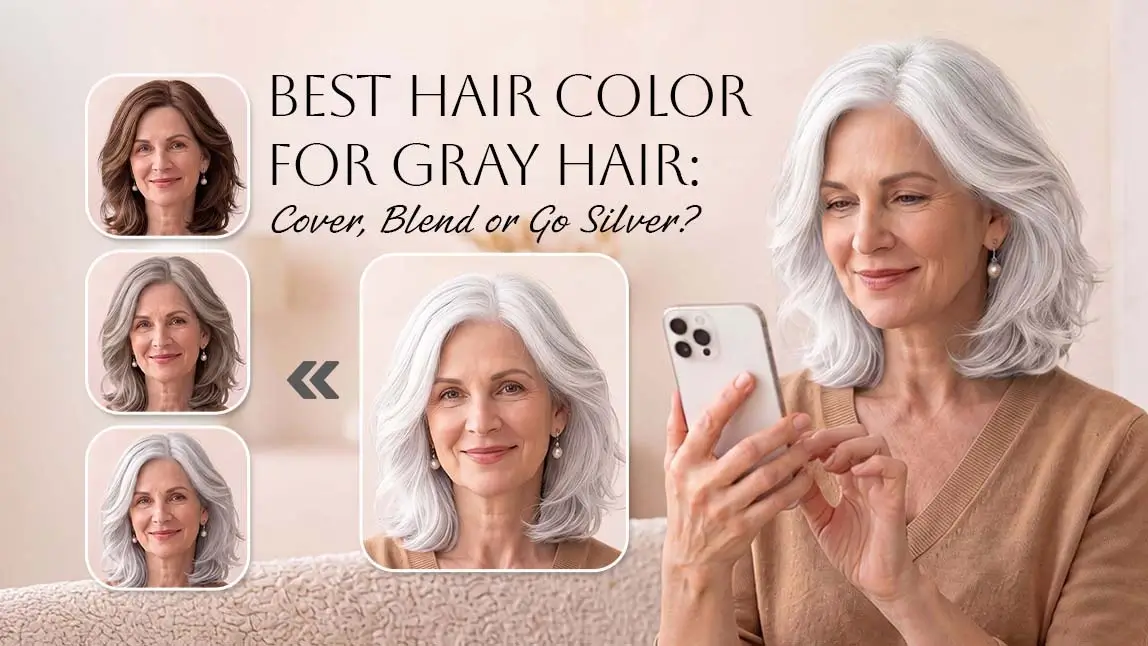
Curious what you would look like fully silver? The AI hair color try-on includes gray and ombre gray shades, so you can preview the destination before you start the journey.
How Does Skin Tone Change the Best Color for Gray Hair?
As hair loses pigment, skin often changes too, usually becoming a little lighter and less warm. That is why a shade that suited you at 30 may feel too harsh now. Match your new color to your current skin, not your old photos.

| Skin tone | Best coverage or blending shades | Best silver finish | Approach with care |
|---|---|---|---|
| Fair, cool | Champagne, ash blonde, mushroom brown | Icy platinum, bright silver | Golden yellow blonde |
| Fair, warm | Strawberry blonde, honey blonde, golden light brown | Pearl or soft silver | Flat ash brown |
| Medium or olive | Caramel, light golden brown, bronde | Salt and pepper, soft silver with lowlights | Icy white |
| Deep | Warm chocolate, soft black with caramel highlights, auburn | Salt and pepper, bright silver | Very pale yellow blonde |
If you are not sure where your skin falls today, an AI read can help. Our guide to AI skin tone detection explains how a single selfie separates skin depth from undertone.
Why Is Gray Hair Hard to Cover?
Gray hair has lost its natural pigment, and many people find their gray strands feel coarser or more wiry than their pigmented hair. Gray hair can resist color, so dye that looks rich on brown hair can come out translucent or fade fast on gray. That is why colorists commonly:

- Use permanent color for full coverage, since demi-permanent and semi-permanent formulas deposit color without fully penetrating resistant strands.
- Mix in a neutral or natural base shade, so the result does not turn too warm, too ashy, or too bright.
- Leave the color on for the full processing time recommended by the manufacturer rather than rinsing early.
- Choose a shade slightly lighter than the target, because color often looks darker on the head than in the box.
If your gray is especially stubborn, a professional colorist is worth the visit. They can adjust formulas zone by zone, since gray is rarely spread evenly.
How Much Upkeep Does Each Option Need?
Hair grows roughly half an inch a month, so regrowth is predictable. What changes is how visible that regrowth looks against your chosen shade.
| Option | When regrowth shows | Touch-up rhythm | At-home help |
|---|---|---|---|
| Dark brown or black coverage | 2 to 3 weeks | Every 3 to 4 weeks | Root touch-up spray or powder |
| Medium brown coverage | 3 to 4 weeks | Every 4 to 6 weeks | Root touch-up, color-safe shampoo |
| Light brown or blonde coverage | 5 to 6 weeks | Every 6 to 8 weeks | Purple shampoo to stop brassiness |
| Highlights or lowlights blend | 8 weeks or later | Every 10 to 12 weeks | Gloss between visits |
| Silver | No regrowth issue | Toner every 6 to 8 weeks, optional | Purple shampoo, UV and heat protection |
How Can You Preview Gray, Colored, or Blended Hair?
The hardest part of this decision is imagining yourself on the other side of it. That is where virtual try-on helps. Instead of committing to a year of grow-out on faith, you can see your face with silver hair, champagne blonde, or caramel brown in a few seconds.

Build gray hair previews into your app with the YouCam API
- Take a daylight selfie with your hair off your face.
- Try three paths: a coverage shade one level lighter than your natural color, a blonde blend, and full silver.
- Judge your skin, not just your hair. The winning shade makes your skin look brighter and your under-eye area softer.
Developers and brands can build this same experience into their own apps and sites. Test the hair color models in the YouCam API Playground.
Why Does AI Try-On Matter for Gray Coverage Brands?
Gray coverage is one of the largest and most loyal segments in hair color. It is also one of the most emotional. Shoppers worry about looking older, looking fake, or making a commitment they cannot undo. Every one of those worries is a reason to abandon a purchase.

Talk to Perfect Corp about AI hair color try-on
AI hair color try-on addresses them directly:
- It shows the realistic result. Perfect Corp's technology detects a shopper's current hair color and renders how a new shade layers over it, so the preview reflects what the box or the salon can actually deliver.
- It recommends shades by skin tone. Shoppers see options matched to their undertone, which is especially valuable when skin has changed with age.
- It works across channels. E-commerce web modules for Shopify, Magento, and Salesforce, mobile SDKs, a RESTful API, and in-salon smart mirrors all run the same engine. Hair color brands including Aveda and Madison Reed use Perfect Corp's try-on.
- It shortens salon consultations. A colorist can show cover, blend, and silver options on a tablet before mixing a single formula.
For more on how the rendering works, see our hair color simulator guide, or contact Perfect Corp for a demo.
FAQ
What is the best hair color to cover gray hair?
A shade one to two levels lighter than your natural color, in a neutral or slightly warm tone, usually gives the most natural coverage. Champagne blonde, beige blonde, caramel, and light golden brown are popular because they keep regrowth soft.
What hair color hides gray roots best?
Light shades hide gray roots best because there is less contrast between the gray and the color. Blonde, light brown, and highlighted hair show regrowth much later than dark brown or black.
Is blonde or brunette better for covering gray hair?
Blonde is usually better for hiding regrowth, especially once you are 50% gray or more. Brunette shades can work beautifully when they stay light to medium and include some dimension. Very dark brunette shows roots fastest.
Can you cover 100% gray hair?
Yes. Permanent hair color formulated for gray coverage can cover fully gray hair, though very resistant gray may need a longer processing time or a professional formula. Demi-permanent color usually blends rather than fully covers.
Is it better to cover or embrace gray hair?
It is a personal choice. Covering gives a familiar look but requires regular touch-ups. Embracing gray takes patience during grow-out but can be lower maintenance long term. Blending is a popular middle ground. Previewing both on your own face can make the decision easier.
Why is gray hair hard to cover?
Gray hair has no natural pigment and can be more resistant to color, so dye may look translucent or fade quickly. Permanent color, a neutral base shade, and the full processing time usually improve coverage.
How often should I dye my hair to cover gray?
Most people touch up every 3 to 6 weeks for full coverage on medium to dark shades. Lighter shades and blended looks can stretch to 8 to 12 weeks.
Is it better to highlight or cover gray hair completely?
If you have less than half gray and want low maintenance, highlights or lowlights are usually better because regrowth blends in. If you want no visible gray at all, full coverage is the way to go.
Does dark hair make you look older?
It can. Very dark, solid color can create strong contrast with lighter, mature skin and highlight shadows and fine lines. Softer, lighter, or dimensional shades tend to look fresher.
Choose Your Path, Then See It First
The best hair color for gray hair depends on how much gray you have, how often you want to touch it up, and how your skin looks today. Cover with a lighter shade, blend with highlights, or go silver with a plan. Whichever path you pick, preview it on your own face first so your next appointment is a decision, not a gamble.