 Author:



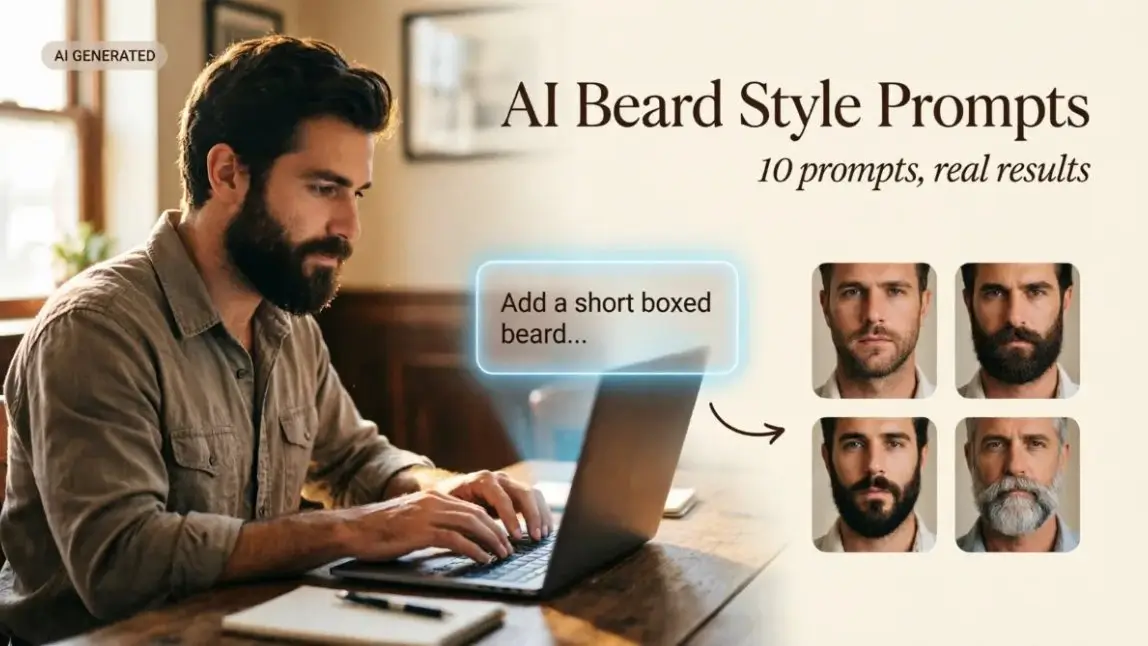
Images designed by YouCam AI
Type "add a beard" into an AI image tool and you will usually get one of two things: a fuzzy chin sticker, or a completely different man wearing your shirt. Neither is what you wanted.
The fix is a better AI beard style prompt. The right wording tells the model exactly which style, how long, how dense, what color, and, critically, what not to touch. We wrote 10 prompts, ran every single one on the same clean-shaven face, and put the results side by side below. Copy them, tweak them, steal them.
Then we flip to the business side: how grooming brands, barbers, and beauty platforms can turn prompt-powered beard previews into campaigns, bookings, and sales, and when it is time to graduate from prompts to a dedicated beard generator API.
Table of Contents
- What is an AI beard style prompt?
- How do you write a beard prompt that looks real?
- 10 AI beard style prompts and how they look
- Why do AI beard prompts fail? 6 common mistakes
- Which AI tools work best with beard prompts?
- Prompts vs. templates: when should you switch to a beard generator API?
- How can brands use AI beard style prompts?
- FAQ: AI beard style prompt
What Is an AI Beard Style Prompt?
An AI beard style prompt is a written instruction you give an AI image editor (ChatGPT, Gemini, the YouCam Online Editor, and others) to add or change facial hair on a photo. It works with image-to-image editing: you upload a portrait, paste the prompt, and the model edits only the beard area.
Every result in this guide started from the same base photo above: one clean-shaven model, same light, same t-shirt, same background. That way, the only variable is the prompt.
How Do You Write a Beard Prompt That Looks Real?

Great beard prompts follow a simple formula. Hit all seven slots and realism jumps dramatically.
| Slot | What to specify | Example wording |
|---|---|---|
| Style | The named beard shape | "short boxed beard," "Van Dyke" |
| Length | A real measurement | "about 10 to 15 mm," "5 cm" |
| Density | How full it grows | "dense, even coverage," "light and natural" |
| Edges | Cheek line and neckline | "sharp cheek line, clean neckline above the Adam's apple" |
| Color | Match or change | "matching the eyebrows," "salt-and-pepper gray" |
| Lighting | Blend instruction | "natural shadows matching the original light" |
| Keep unchanged | Identity lock | "keep the face, skin, hair, clothing and background exactly the same" |
That last slot is the secret sauce. Skip it and many models will "helpfully" redraw your whole face.
10 AI Beard Style Prompts and How They Look
Each prompt below is copy-paste ready. Swap the color or length to match your own face. Results were generated with image-to-image editing on our test portrait.
1. Designer Stubble (the 3-Day Shadow)

How it looks: instantly older, sharper, a little more "I have a podcast." Stubble is the safest first test because almost every face shape wears it well.
Brand strategy: perfect hero look for trimmer brands. Pair the result with the exact guard setting (usually #1) and a "maintain this look" product bundle.
2. Short Boxed Beard

How it looks: the corporate-friendly beard. Structured, clean, and slimming on round faces.
Brand strategy: great for "office-ready grooming" campaigns. Barbers can list it as a menu item with a fixed price and a preview image.
3. Full Lumberjack Beard

How it looks: maximum rugged. This is the "should I grow it out?" test most men are secretly curious about.
Brand strategy: beard oil and balm brands, this is your money shot. Use it as the "8 weeks from now" goal image in growth-kit funnels.
4. The Viral Italian Beard

How it looks: effortlessly expensive. The "Italian beard prompt" became a social media trend for a reason: it flatters most faces and photographs beautifully.
Brand strategy: ride the trend. A "Get the Italian Beard" landing page with a try-on, a styling balm, and a mustache wax practically writes itself.
5. Classic Goatee

How it looks: focused and defined. It lengthens a round face and gives soft chins more structure.
Brand strategy: precision-trimmer territory. Show the goatee, then a short "edge it in 3 steps" tutorial video using your detailer attachment.
6. Van Dyke

How it looks: artistic, a little theatrical, very confident. The disconnected gap is what makes it a Van Dyke, so always say "not connected."
Brand strategy: ideal for mustache wax and styling products. It also makes a great "bold look of the month" social post.
7. Ducktail Beard

How it looks: sculpted and stylish. The tapered point adds length, which is a cheat code for round and square faces.
Brand strategy: a showcase style for premium barbers. Feature it in "signature cuts" galleries that link straight to booking.
8. Balbo Beard

How it looks: deliberate and polished. It frames the mouth and sharpens a softer jawline.
Brand strategy: great for "style finder" quizzes. Men rarely know the name Balbo, so seeing it on their own face is a genuine discovery moment.
9. Salt-and-Pepper "Silver Fox"

How it looks: distinguished, warm, trustworthy. Plenty of men find gray flattering once they actually see it.
Brand strategy: a two-sided win. Beard dye brands can show "embrace it vs. cover it" previews, while gray-care brands (purple shampoos, softening oils) can celebrate it.
10. Chevron Mustache (Clean-Shaven Jaw)

How it looks: retro-cool, a little 1980s detective. Polarizing in the best way.
Brand strategy: made for Movember and charity months. "Pick my mustache" polls drive huge engagement and give your brand a feel-good story.
| # | Style | Best face shapes | Maintenance | Best brand fit |
|---|---|---|---|---|
| 1 | Designer stubble | All | Low | Trimmers |
| 2 | Short boxed | Round, oval | Medium | Barbers, trimmers |
| 3 | Full lumberjack | Oval, oblong (kept shorter) | High | Beard oil, growth kits |
| 4 | Italian beard | Round, square, oval | Medium-high | Balms, waxes, trend campaigns |
| 5 | Classic goatee | Round, square | Medium | Precision trimmers |
| 6 | Van Dyke | Oval, square | High | Mustache wax |
| 7 | Ducktail | Round, square | Medium-high | Premium barbers |
| 8 | Balbo | Oval, oblong | High | Style quizzes, barbers |
| 9 | Silver fox | All | Medium | Beard dye, gray care |
| 10 | Chevron mustache | Oval, oblong | Medium | Seasonal campaigns |
Why Do AI Beard Prompts Fail? 6 Common Mistakes

- Too vague. "Give him a beard" leaves style, length, and color to chance.
- No identity lock. Without "keep the face exactly the same," models may change eye shape, nose, or age.
- Confusing style names. Models mix up Balbo, Anchor, and Van Dyke. Describe the shape, not just the name.
- Color mismatch. Always tie beard color to the eyebrows or hair, or state a specific shade.
- Bad source photo. Side angles, sunglasses, harsh shadows, and hands near the chin all hurt results.
- Too many changes at once. Asking for a beard, a new haircut, and a new outfit in one go invites chaos. Edit one thing at a time.
Which AI Tools Work Best With Beard Prompts?
Any modern image-to-image model can run these prompts. Here is how the main options stack up for beard edits:
| Tool type | Strength | Watch out for |
|---|---|---|
| General chat assistants with image editing (ChatGPT, Gemini) | Easy, conversational, good at following long prompts | Face drift on some runs; results vary between attempts |
| YouCam Online Editor AI image generator | Choose between leading models (including GPT-Image and Nano Banana) in one place, image-to-image ready | Still prompt-based, so wording matters |
| Dedicated AI beard generator (template-based) | Consistent styles, beard removal, identity preserved | Fixed menu of styles instead of free text |
Rule of thumb: prompts are amazing for exploration and creative content. Templates win when you need the same quality on every customer, every time.
Prompts vs. Templates: When Should You Switch to a Beard Generator API?

| Text prompts | Beard generator API (templates) | |
|---|---|---|
| Creative freedom | Unlimited | 15 curated styles |
| Consistency | Varies run to run | Same style, same quality, every time |
| Identity preservation | Depends on wording and model | Built in |
| Beard removal | Hit or miss | Dedicated "Shaved" template |
| Best for | Content, mood boards, trend posts | E-commerce, apps, in-store tools |
| Integration | Manual | REST API, webhooks, MCP |
When a beard preview has to sit on a product page or inside an app, switch to the YouCam AI Beard Generator API. You send a selfie and a template ID, and you get a consistent, photorealistic result back. For the full breakdown of what it simulates, read our deep dive on the AI beard generator.
How Can Brands Use AI Beard Style Prompts?

Prompts are not just a toy for curious guys. For brands, they are a fast, cheap creative engine. Five strategies that turn beard prompts into business results:
1. Turn Every Style Into a "Shop This Beard" Bundle
Map each of the 10 styles to the exact tools and products needed to recreate it: guard length, trimmer attachment, oil or balm, wax. A product page that says "Get the Italian Beard: here is everything you need" converts curiosity into a cart.
2. Launch a Seasonal Beard Lookbook
Use prompts to generate a full lookbook on one consistent model in an afternoon, not a two-day photo shoot. Refresh it each season, around holidays, or whenever a style trends on social.
3. Give Barbers a Visual Style Menu
Barbershops can publish a "beard menu" where each style has a preview, a price, and a book button. Clients stop describing beards with their hands and start pointing at a picture.
4. Run a "Prompt Your Beard" UGC Challenge
Share the formula, invite followers to try it on their own selfies, and repost the best results. It is low-cost engagement with built-in product tie-ins, and it collects useful insight into which styles your audience actually wants.
5. Graduate to an API, Then Let AI Agents Do the Work

Once the experiment proves demand, move customer-facing previews to an API for consistency. YouCam APIs also support the Model Context Protocol, so your shopping assistant or internal AI agent can call beard simulation in plain English. Set it up with YouCam MCP and Agent Skills, and combine it with AI face shape analysis to recommend the right beard automatically. Want to see how other brands roll out AI try-on? Browse Perfect Corp.'s success stories.
FAQ: AI Beard Style Prompt
What is the best AI prompt for a beard?
The best prompt names the style, gives a length in millimeters or centimeters, describes density and edges, sets the color, and ends with "keep the face, skin, hairstyle, lighting, clothing and background exactly the same." Our short boxed beard and designer stubble prompts are the most reliable starting points.
How do I add a beard to my photo with ChatGPT or Gemini?
Upload a clear, front-facing selfie, paste one of the prompts above, and ask the assistant to edit the photo. If the face changes, regenerate and repeat the "keep everything else exactly the same" instruction.
What is the Italian beard prompt?
It is a viral prompt style that adds a full, sculpted, medium-length beard with a softly pointed chin and a thick, slightly upturned mustache. Use prompt #4 above for a realistic version.
Why does AI change my face when I add a beard?
Image models sometimes regenerate the whole picture instead of editing one area. Add an identity lock to your prompt, use a high-quality front-facing photo, and edit one feature at a time. Template-based beard generators avoid this by design.
Can I use AI to see which beard suits me?
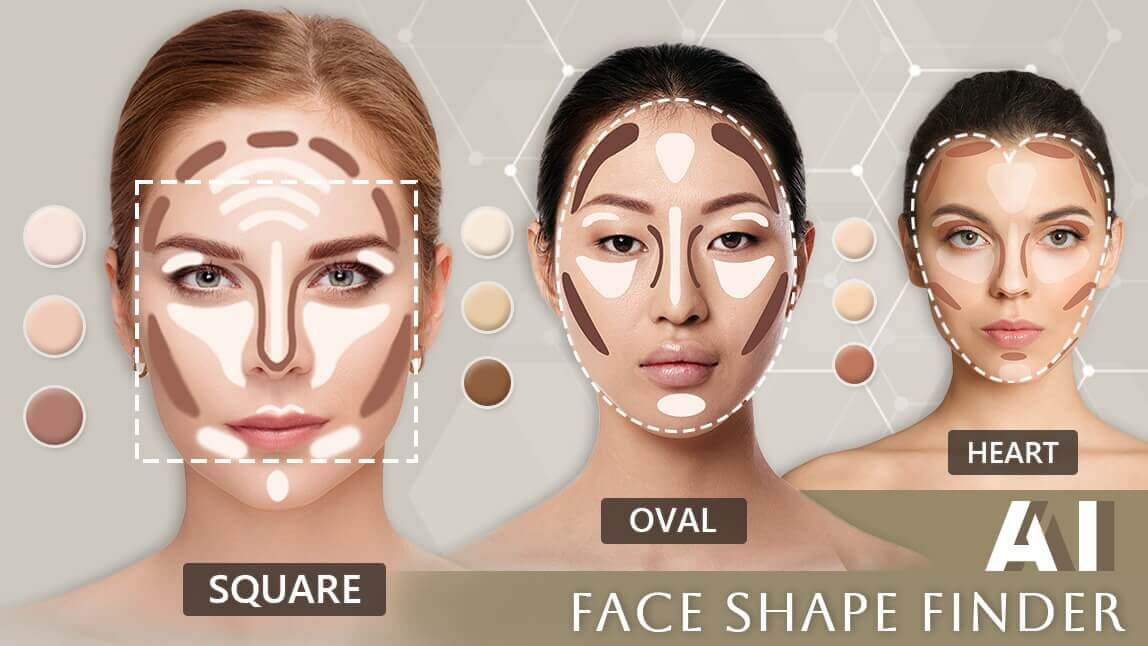
Yes. Run several prompts on the same selfie and compare, or use an AI beard filter that offers multiple styles in one click. Pair it with a face shape analyzer for personalized recommendations.
Are AI beard style prompts free to use?
The prompts in this guide are free to copy. Some AI tools offer free daily credits, while others charge per image. Brands generating previews at scale typically use a pay-as-you-go API.
How can brands use AI beard prompts?
Brands use them for lookbooks, "shop this beard" bundles, barber style menus, social UGC challenges, and campaign creative. For customer-facing tools, they usually move to a template-based beard generator API for consistent results.