


AI Skincare Quiz: Skip the Questions, Scan the Skin
What is an AI skincare quiz?
What is an AI skincare quiz?
An AI skincare quiz replaces the multiple-choice questions of a traditional skincare quiz with a selfie. Computer vision scores the shopper's visible skin concerns, identifies their skin type and estimates skin age, then recommends a routine and products. Instead of asking shoppers what they think their skin is like, it shows them.
Why upgrade your skincare quiz to AI skin analysis?
Many shoppers are unsure whether their skin is oily, dry or combination. A wrong answer leads to the wrong products. The AI reads skin type from the T zone and U zone instead.
A quiz sorts shoppers into a few broad buckets. The AI scores 16 skin concerns from 0 to 100, so recommendations target what each face actually needs.
No question screens to drop off from. One selfie or a live camera scan, and results arrive in seconds.
Shoppers can rescan to see how their skin changes on a routine, something a one-time quiz cannot show.
8 skin types the AI skincare quiz detects
Balanced oil and moisture with little visible redness.
Visible shine and higher sebum across the face.
Lower moisture with a tight or dull look.
Oilier in the T zone, drier in the U zone.
Visible redness without strong oiliness or dryness.
Dryness together with visible redness.
Oiliness together with visible redness.
Mixed oil zones together with visible redness.
What shoppers get after the scan
Step-by-step skincare routines built automatically from each shopper's scores.
Brands can generate branded skincare reports that shoppers download and share. No coding needed.
AI skin simulation shows before and after previews for up to 7 skin concerns, so shoppers can see what a routine or treatment aims to improve.
What a skincare quiz asks vs. what the AI measures
Every common quiz question has a measured answer in the AI scan.
| Typical skincare quiz question | What the AI skin analysis measures instead |
|---|---|
| "What is your skin type?" | Skin type read from the T zone and U zone across oiliness, dryness and redness, classified into 8 types |
| "Do you have visible pores?" | Pore scores for the full face, forehead, nose and cheeks |
| "Are you concerned about wrinkles?" | Wrinkle scores by zone, including forehead lines, crow's feet, nasolabial folds and marionette lines |
| "Is your skin red or sensitive?" | A redness score, plus redness-based skin types such as oily and redness |
| "Do you have dark spots or uneven tone?" | Spot and radiance scores |
| "Do your eyes look tired?" | Dark circle, eye bag, tear trough and droopy eyelid scores |
| "How old are you?" | An estimated skin age based on the combined pattern of visible concerns |
A camera cannot see personal preferences such as budget or fragrance-free formulas. Those are best handled by the product filters already on your store.
How accurate is an AI skincare quiz?
The same face scanned twice under the same conditions returns the same result
Correlation with physician assessments and imaging devices for specific concerns. Read the research
Covering all six Fitzpatrick skin types, so results hold up across light and deep skin tones.
Who Can Benefit from Skincare Quiz
Give shoppers a personalized analysis and a clear path to the products that fit their skin, turning a transaction into a consultation.
Replace a static quiz with an in-depth skin analysis and auto-generated reports that help shoppers choose with confidence.
Show clients measured skin data and simulated results to support treatment and product recommendations.
Traditional skincare quiz vs. AI skincare quiz
| Traditional skincare quiz | AI skincare quiz | |
|---|---|---|
| Based on | What shoppers believe about their skin | The shopper's actual skin, from a selfie |
| Shopper effort | Several question screens | One photo or live scan |
| Detail | A few broad skin type labels | 16 concerns scored 0 to 100, 8 skin types, skin age |
| Tracks change over time | No | Yes, by rescanning |
| Visual extras | None | Skin simulation and branded reports |
| Best for | Collecting preferences such as budget or texture | Accurate, personalized product and routine recommendations |
Our take: If your current quiz recommends products based on how shoppers describe their own skin, an AI skin scan is the upgrade. It turns guesses into measurements and gives shoppers a reason to come back and rescan.
How Does AI Skincare Quiz Work?
Choose selfie or live mode
Shoppers upload a photo or scan with their camera. No questions to answer first.

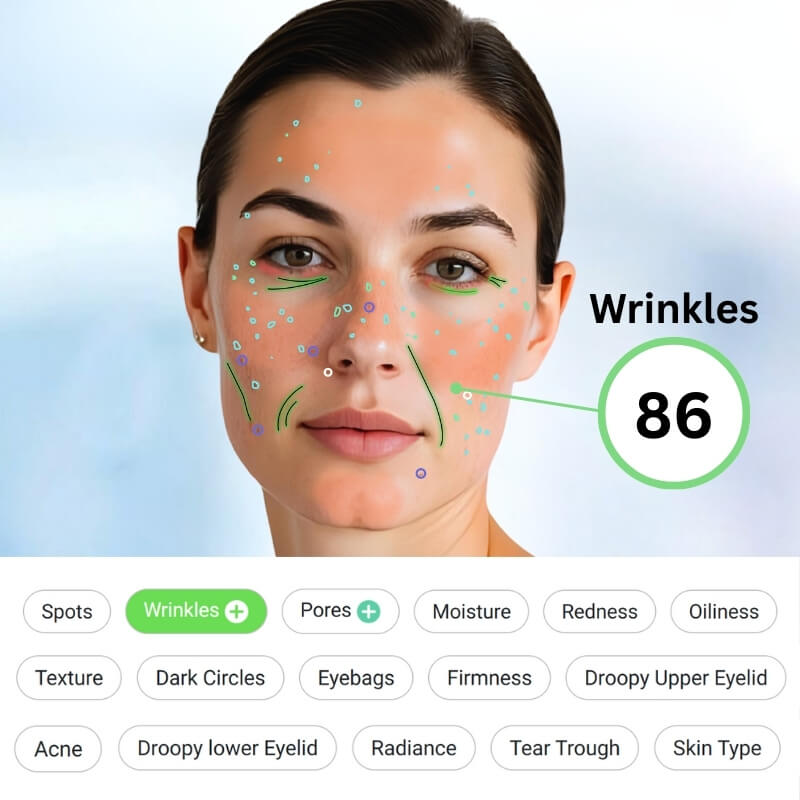
The AI analyzes the skin
It runs 28 diagnostics across 16 skin concerns, identifies one of 8 skin types and estimates skin age.
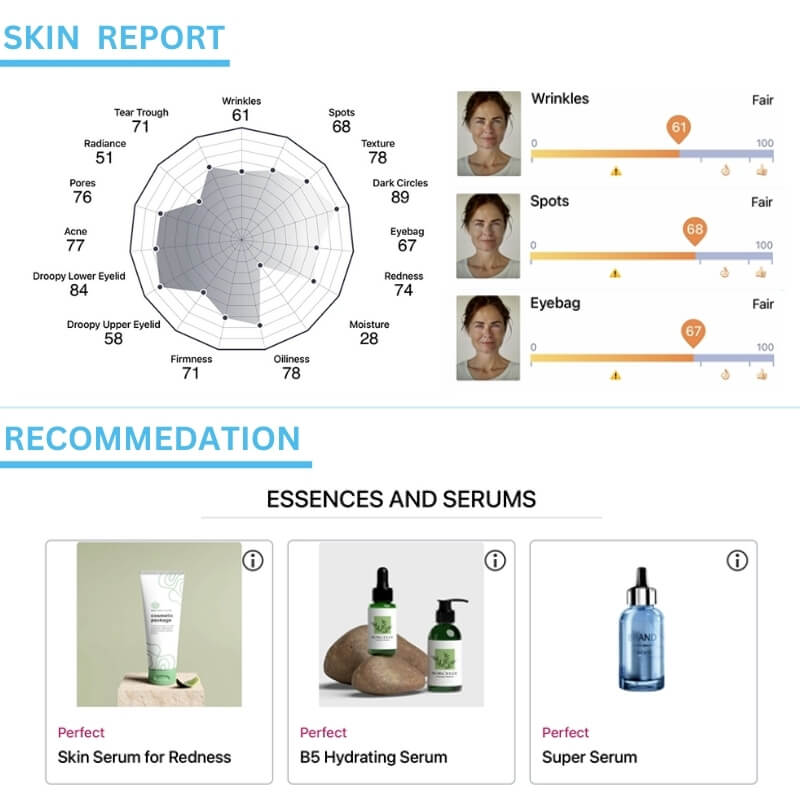
Get the skincare report
Shoppers receive a personalized report with a routine and products matched to their lowest scores.
Add the AI skincare quiz to your website or app
Add the AI skincare quiz to your website or app
Launch with a RESTful API, web modules, or mobile SDKs, with mini-program support for Taobao, WeChat and Douyin. Brands can go live quickly and scale across markets.
Ready to upgrade your skincare quiz?
Tell us about your store and catalog, and we will set up a free demo with your products.
AI Skincare Quiz Frequently Asked Questions
What is an AI skincare quiz?

An AI skincare quiz uses a selfie instead of multiple-choice questions. AI analyzes visible skin concerns, identifies skin type and estimates skin age, then recommends a routine and products. Perfect Corp.'s version scores 28 diagnostics across 16 skin concerns and 8 skin types.
Is an AI skin scan better than a skincare quiz?
For product recommendations, usually yes. A quiz relies on how shoppers describe their own skin, and many are unsure of their skin type. An AI scan measures visible concerns directly and can be repeated to track change. Preferences such as budget or fragrance-free formulas are still best handled by your store's filters.
How accurate is the AI skincare quiz?
Perfect Corp.'s skin analysis showed 95% test-retest reliability and over 80% correlation with physician assessments for specific concerns. It is trained on more than 70,000 images covering all six Fitzpatrick skin types. Results are most consistent in soft, even light with bare skin.
Can brands add the AI skincare quiz to their website, app or mini-program?
Yes. It is available through a RESTful API, web modules and mobile SDKs, with mini-program support for Taobao, WeChat and Douyin. Brands can also generate branded reports without coding.
Is an AI skincare quiz a medical diagnosis?
No. It provides cosmetic estimates of how skin looks in a photo and does not diagnose skin conditions or assess moles. For medical concerns, shoppers should see a qualified dermatologist.
Related
- Skincare AI for brands
- Free AI skin analysis from a selfie
- AI skincare routine builder
- AI skin simulation
- Skin type test
Perfect Corp.'s AI skin analysis is intended for cosmetic and educational use. It does not diagnose any medical condition.


